Sunday, March 18, 2007

First comes, perhaps, a howling dervish...


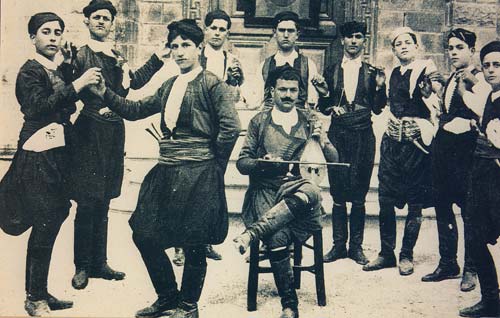
Howling Dervish photo by El Chark studio.

"First comes, perhaps, a howling dervish on his way to a performance, where, with his fellows, he will hurl himself about and howl the name of Allah, until, with foaming lips, protruding eyes, and matted hair, he falls exhausted, as if convulsed with epilepsy. Following him, one may behold, within five minutes, a richly-turbaned Arab, with gold-embroidered jacket; a tattooed Nubian from the upper Nile; a Jew with a long, yellow coat and corkskrew curls; a group of Persians bedizeded with cheap jewelry: a black eunuch escorting a carriage of veiled ladies; groups of Bohemians; venders of melons, dates, apples and pop-corn; a florid-faced English merchant; a Roman Catholic priest; a Damascus camel-driver; a pilgrim just returned from Mecca: a Chinaman with hie queue; a missionay of the American Board, and even a "personally conducted" party of excursionists. Pick up a hand-bill dropped here by a passer-by, and you will find it printed in five or six different languages. As many more strange tongues may possibly be overheard by you while walking from Stamboul to Galata. Such at least has been my experience at this point where two worlds meet,- the Orient and the Occident,- the pontoon bridge of the Golden Horn."

Constantinople as described by John Stoddard in 1897


[1] Pascal Sebah's studio, El Chark, opened in 1857, and it was Sebah who took all the photographs for the album of Ottoman costume published for the Vienna Exposition in 1873. Sebah went into partnership with Policarpe Joaillier in 1888, after which the studio was renamed Sebah & Joaillier.

Wednesday, February 07, 2007

Friday, December 01, 2006

Notes on Costak 2


“El-mecâzu kantaratü’l-hakîkah” Metaphor is the bridge of reality.

What Costak, for that matter what Petri stands for? For what? What reality we have in the film? In his real or imagined life? Criminal history?

Why I find a certain connectedness in the story 'the somewhat meaningless crime and death' of an immigrant dishwasher who worked long and silent years in a nondescript hotel kitchen in North America?

The curator? What is his achievement
if he only gets and displays the slippers without truly understanding the connections in the story? Is he just curious about the story or the object.

Tuesday, November 28, 2006

Notes on Costak 1

Guillermo del Toro in his notes for his latest film Pan's Labyrinth says "Fairytale logic is not linear, it's random". This idea appeals to me in constructing the movie version of Costak. There is already a linear crime story which I hope to find (microfilm archives in Ataturk Library, Taksim, Istanbul) in it's extended version as it was serialized in possibly Tercuman newspaper pre-1972. But Costak is different and involves a modern story and shifting moments from Petri's life enhanced with images, feelings and songs. The historic realities of the day will be in the background. However it will not interfere with his behavior. How interesting this randomness can be is a challange of course.
November 2006
Tyson's Corner

Tuesday, August 15, 2006

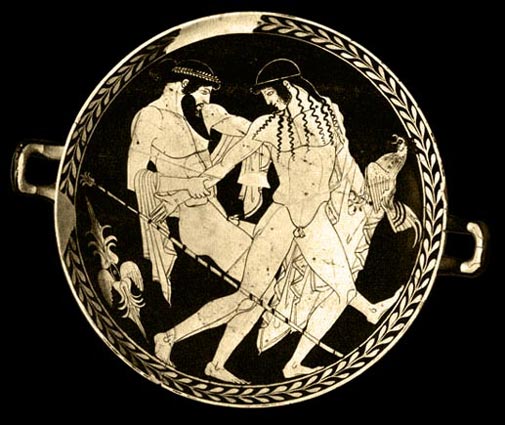
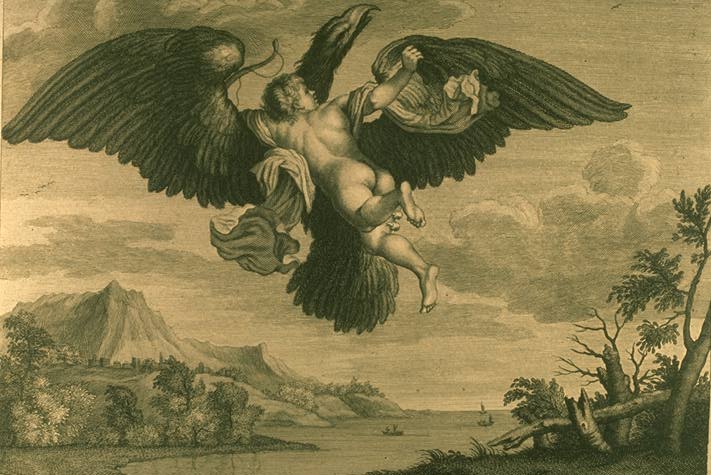
Costak as Ganymede


Costak and Lefteri Kaptan as Ganymede[1] and Zeus. The slaying of Lefteri kaptan adds another 'killing of the missing father' angle to the story.


[1]Ganymede

Trojan youth taken by Zeus as his cup-bearer (and lover), from Greek Ganymedes, perhaps a non-Greek name, or from ganymai "I rejoice, am glad" (related to ganos "brightness; sheen; gladness, joy; pride") + medea (plural) "counsels, plans, cunning" (see Medea); taken in Greek folk-etymology to mean "delighting in genitals." Used figuratively of serving-boys (c. 1600) and catamites (1590s). Associated with Aquarius in the zodiac. As the name of one of the four large satellites of Jupiter, by 1847.

catamite (n.)
"boy used in pederasty," 1590s, from Latin Catamitus, corruption of Ganymedes, the name of the beloved cup-bearer of Jupiter (see Ganymede). Cicero used it as a contemptuous insult against Antonius.


Ganymede by Mia Gibson

Ganymede is the young, beautiful boy that became one of Zeus' lovers. One source of the myth says that Zeus fell in love with Ganymede when he spotted him herding his flock on Mount Ida. Zeus then came down in the form of an eagle or sent an eagle to carry Ganymede to Mount Olympus where Ganymede became cupbearer to the gods. According to other accounts, Eos kidnapped Ganymede, to be her lover, at the same time she kidnapped Tithonus. Zeus then robbed Eos of Ganymede, in return granting Eos the wish that Tithonus be immortal. Unthinkingly, Eos forgot to ask that Tithonus remain youthful. Everyday, the faithful Eos watched over Tithonus, until one day she locked him in a room and left him to get old by himself.

Upon hearing that Ganymede was to be cup bearer as well as Zeus' lover, the infinitely jealous Hera was outraged. Therefor Zeus set Ganymede's image among the stars as the constellation Aquarius, the water carrier. Aquarius was originally the Egyptian god over the Nile. The Egyptian god poured water not wine from a flagon.

All of Zeus' scandalous liaisons have allegorical meanings. Some sources say that Zeus' affair with Ganymede was a (religious) justification for homosexuality within the Greek culture, yet others state that this is merely a reflection of Greek life at that time. Before the popularity of the Zeus and Ganymede myth spread, however, the only toleration for sodomy was an external form of goddess worship. Cybele's male devotees tried to achieve unity with her by castrating themselves and dressing like women.

Apollodorus argued that this myth emphasized the victory of patriarchy over matriarchy. This showed that men did not need women to exist, therefor they did not need the attentions of women. The philosopher Plato used this myth to justify his sexual feelings towards male pupils.

Wednesday, July 05, 2006

Bostan

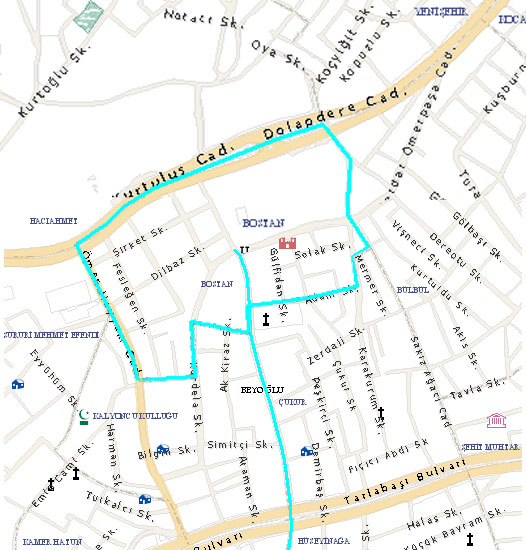
Petri lived in a ruined shack in a bostan(large garden for growing vegetables). The are known as Bostan Neighborhood is now part of the Beyoglu (Pera) District and is inhabited mostly by Romany (Gypsy) families. The pub he frequented on Kalyoncu Kulluk was nearby. During De Amicis visit in 1870's the creek that gave it's name to the area Dolapdere was dry. Since the creek required a device called "dolap" to raise water it had a week run. One of the side strets are called Dere Ustu today.

Edmondo De Amicis (October 21, 1846—March 12, 1908), is a notable Italian novelist, journalist, and short-story writer. Journeying to Constantinople by boat, Edmondo De Amicis is initially dismayed to discover that his first glimpse of this much-awaited city will be obscured by fog. Yet, as he will come to appreciate, the slow unveiling of rooftops, domes and minarets is in fact the best introduction to Constantinople he could wish for. Throughout his stay in this most cosmopolitan of cities – with Greeks, Turks, Armenians, Gypsies, Catholics and Jews sewn together in a patchwork of life – he encounters the inhabitants’ endless vitality, in a city which provides an inexhaustible source of beauty and mystery.
Costantinopoli (1878)

I had De Amicis' text ready when I came to Istanbul. For he had seen what I cannot see today' - Umberto Eco (from his foreword)

Wednesday, June 14, 2006

Hotel de Marseille


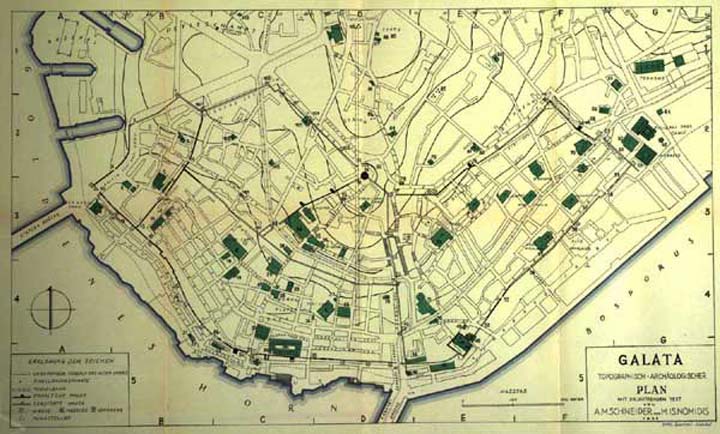
1944 | Nomidis and Schneider [1]| Archaeological and Topographical map of Galata

Early Istanbul hotels differed from the traditional han (caravanserai) and provided a bed instead of an empty room. Mostly operated by minority Christians and some other nationalities, the Galata hotels were the first to emerge due to the proximity of the port and they used western names to increase their appeal to foreigners. Some recorded names were Hotel de Marins (Sailors’ Hotel), Hotel de Voilier (Hotel of Sailboat) and Hotel de Marseille.

In 1874 Petri the Knife slashed his protector Lefteri Kaptan to death in Hotel de Marseille. He was about 17-18 years old. The hotel was described as a two story structure with two bed and three beds with a capacity of 24 guests. On the murder night the police recorded 58 inhabitants at the hotel.

Among them:
-a volunteer fire fighter (tulumbaci) Camur Salih of Uskudar (age 30)
-a volunteer fire fighter Ablasiguzel Mustafa (age 30)
-a navy private Yunus, (age 20)
-a ship record keeper of Hamburg and a young Greek kalopedi
-two Black Sea boatmen and a street prostitute

See: Ahmed Midhat Efendi’s novella “Durdane Hanim” has a colorful section where the heroine Ulviye cross dresses as a man and ends up in a Galata hotel with a Circassian man.

[1]Schneider-Nomidis, Galata = Schneider, A.M. - Nomidis, M.I., Galata, Estambul 1944.

Monday, June 12, 2006

Abstract | Children in Byzantine Monasteries

"Children in Byzantine Monasteries"
Richard Greenfield
Many, perhaps a majority, of those involved in the world of Byzantine monasticism clearly believed that the monastery or convent was no place for children, just as it was not a place for eunuchs or members of the opposite sex. Others, however, could not so easily forget the exhortation of Jesus in the Gospel to "Let the children come to me," nor the precedent set by influential individuals in the early history of monasticism who did permit children in their foundations. As a result, despite frequent prohibitions and dire warnings of the consequences, children appear quite regularly within the fabric of Byzantine monastic life. It is evident that they were present in many communities throughout the period, albeit usually in small numbers and under carefully controlled circumstances.

In the late seventh century, the Sixth Ecumenical Council established the age of ten as the minimum at which a child might begin life in a monastery, but most later monastic founders and commentators set the bar much higher at the mid-teens to the early twenties. The temptations of sexual misconduct were always prominent in the minds of ascetics and monastic regulators, and the fear that the presence of beardless youths might prove too much for the monks clearly lies behind most attempts to exclude them. Also at work in such prohibitions, however, was evidently a desire to prevent women or eunuchs slipping undetected into monasteries, to ensure that vows were taken only by those who knew what they were doing, to forestall the ordinary distractions that might be produced by frivolous and irresponsible youths and girls, and to keep monks and nuns from the attachments of family life. The ban on children was extended in some places to cover not only those testing a vocation but also those who might be brought to an institution out of need (orphans or beggars, for example), in the course of everyday life (on errands or on feast days, perhaps), or in the course of work (such as apprentices or the offspring of manual laborers).

Such attempts to exclude children ran largely counter to the practice and sentiment evident in monastic institutions of the early Byzantine period, however, and it is clear that many individuals and communities in the later centuries, even during the period of reform, still saw no need to comply with the wishes of the rigorists. Hagiographies thus abound with saints and monastic founders who flee their families at a very early age and find a welcome in the monastic communities for which they pine, while relatives of prominent monks and nuns are adopted in their infancy and reared within the institution, often becoming ascetics and monastic administrators in their own right. At the same time orphans are cared for, prospective monastic or clerical candidates are educated and trained, young relatives are allowed to visit, youthful servants and workers are employed, and sick or possessed children are treated. Typically in the Byzantine world, behind the rhetoric of principled declarations and legal documents requiring the exclusion of children from monasteries, lies a rather different reality where children flit through the shadows of the courtyard and peep from the doorways of the outbuildings and dependencies of the monastic community.
|
Dumbarton Oaks, Washington DC | Byzantine Studies 2006 Spring Symposium |
April 28–30, 2006 Becoming Byzantine: Children and Childhood in Byzantium

Saturday, June 10, 2006

Knife Fighting in Nineteenth-Century Greece

Petri the Knife also belonged to this knife obsessed culture.

Honor, Masculinity, and Ritual Knife Fighting in Nineteenth-Century Greece
THOMAS W. GALLANT


On the sweltering night of July 26, 1830, Tonia Theodoros from the village of Agios Theodoros on the island of Kerkyra brutally slashed the face of his fellow villager Gioragachi Mokastiriotis. Theodoros then spit on his prostrate victim and left the wine shop where the incident had occurred, while five other men, including the proprietor Panos Landates, looked on. Ten days later, Constable Andreas Sallas approached Theodoros, served him with an arrest warrant, and took him into custody on the charge of assault with a deadly weapon. At his trial in police court on August 28, the various versions of Theodoros's assault on Mokastiriotis were recounted. There had been bad blood between the men for some time; no one was quite sure why. That night at the bar, both had been drinking heavily when Theodoros called Mokastiriotis a fool and a braggart. Mokastiriotis loudly replied that he would rather be a fool than "the lord of a house full of Magdalenes." Theodoros erupted from his chair, drew his pruning knife, and demanded that Mokastiriotis stand and face him like a man. None of the other men in the room intervened as the knife-fighters traded parries and thrusts. Finally, Theodoros with a flick of his wrist delivered a telling blow that cut his victim from the tip of his chin to halfway up his cheek. As the blood flowed, Mokastiriotis fell to his knees cursing his assailant. When asked by the presiding magistrate at the police magistrate's court in the town of Kerkyra why he started fighting, Theodoros sternly replied that no man would call his wife and daughters whores and get away with it. His reputation would not allow it. As a man, he would not stand for it.
Full text archive

Kemence/Lyra

"Costak" soundtrack uses the sounds of the area Petri lived and includes a song played by a Greek lyra. A closely related instrument of of the Black Sea kemence. Here is a nice folk belief relating to music provess and a Cretan hilted dagger.


"Whoever wants to become a good lyra - player should go to an isolated crossroads at midnight. First he should trace a circle on the ground with a black - hilted dagger, then enter it, stay there and start playing the lyra. A little later the Fairies will come and start hanging around him. Their purpose is not good, they want to do him harm, but since they cannot enter the circle, which has been traced with a black - hilted dagger, they try to lure him out in every possible way. They use blarney, they sing him nice songs, they wheedle him in a thousand and one different ways, but if he is wise, he must remain calm and continue to play the lyra without leaving the circle. If they fail, they invite him out of the circle in order to teach him how to play the lyra better. He must refuse. Then they will ask him to give them the lyra. The lyra - player should give it, cautious to let his arm or other part of his body out of the circle, because it will be amputated or he will go insane.

Then a Fairy starts playing the lyra with great virtuosity and afterwards they return the lyra to him, hoping that he will be persuaded to leave the circle and they will be able to harm him". According to the description of Nikos Politis, the continuous interchange of the instrument between the Fairies and the lyra - player, without anyone of them passing the limits of the circle traced with the black - hilted dagger, continues all night long until the first cock crows. Then they ask him to give them something of his own and they promise to teach him how to play the lyra like them in return. The lyra - player usually gives them one of his nails and they in turn teach him how to play the lyra with great virtuosity and then disappear at daybreak.

For this reason, in earlier times, if a lyra player played his instrument with outstanding virtuosity, he used to say: "What do you think? I learnt to play the lyra at the crossroads".

Source: The Cretan Dagger
http://www.explorecrete.com/traditions/cretan-dagger-1.htm
http://www.explorecrete.com/traditions/cretan-dagger-2.htm
http://www.explorecrete.com/traditions/cretan-dagger-3.htm

A Knife for Petri

Was that boy asleep, or did he stand waiting at the foot of Slightly's tree, with his dagger in his hand?
The Adventures of Peter Pan by Barrie, James Matthew

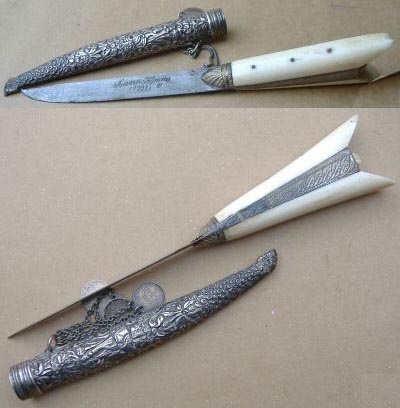
length: 10 3/4"
blade: 6 3/8"
blade width: 1 3/16"
grip: 4 1/4"
weight: 4.8 oz

Greek knife from the Isle of Crete. The knife was made in the city of Khanya and dated 1951. Hilt has traditional "two eared" style reminiscent of Turkish yataghan, and is most likely goat or cow bone with a working-life repair to one side of the v-notch. The Cretans have been known as "the people of the dagger" since knives are worn as part of male and female folk costume, and knife making and decoration is a handicraft relatively widely practised.

Another rare greek knife, from the greek island of Crete.The greek inscription says: Chania.The embossed silvered metal scabbard with 4 silver coins attached from 1800's.
length : 81/2 inches ( 211/2 cms)
blade: 43/4 inches (12 cms)
handle: 33/4 inches (91/2 cms)

A Knife to the Heart

Part of the "Costak" preproduction involves planning the visual style of the murders. The passion or the reason involved in the murder seems more to the point than blood being spilt everywhere. "Costak" is not about gore but things that might terrify us beyond gore. What helps in this view is the method used by Petri. Most of Petri's murders are committed with a knife to the heart. A side benefit to a murder like this is less blood squirting out since heart almost immediately stops pumping blood.

A found this tidbit in a book called "Mobspeak".

Mobspeak: The Dictionary of Crime Terms (Paperback) by Carl Sifakis
352 pages Checkmark Books (September 2003) ISBN: 0816045496

1880| Petri the Knife

Galata
Petri at a Kuledibi brothel
Night of flames at Horoz Street
Petri meets two lovers that night
Aliki, young prostitute her young lover Ahilea
Kalikratya
They take Petri to Kalikratya fishermen's village
Petri hides at Kalikratya
Petri finds a peaceful existence
Ahilea Andoni "suslu balikci"
Aliki and Ahilea live in fear since they know who Petri is
Petri learns of Canto singer Peruz from the fishermen
Galata
Trip to Casino with the fishermen | Galata Avrupa Gazinosu
She is her Peruz and in the arms of a navy sailor at the bar
Murder #14 | Ahmed
Knife ?
Salipazari
Someone recognises and follows Petri
Murder #15 | Hasan
Knife to the heart
A few moments later petri is on board a ship
There is no hope of going back to Kalikratya
Tophane
Andon Kaptan, a night thief helps Petri's escapeto Odessa
Odessa
Petri finds work as a stoker. S/s Ayvazofski, a Russian ship
Kefalonians only works in Greek boats
Petri is safe from the Avengers from Kefaloniya
at sea
Captain's wife Alexandra is after Petri
Alexanda and Petri find a night of love in a lifeboat
Köstence
Next day Petri runs away in Rumanian port of Köstence
Befriends Milolis of Sile
Petri returns to Istanbul on board a Greek boat
Petri's first sight is a young prostitute Magdalena
Magdalena is Kiryakica, Lefteri Kaptan's daughter
Petri can not recognize her
They make love at Magdalena's room
Early morning…Petri leaves
Lambo, a sailor and young brother of Lefteri kaptan waits
Petri was also Lambo's zenane for four years
Early morning ambush
Galata
Last Murder | Death of Petri by Lambo 8/28/1880
Petri file closes once more

1879| Petri the Knife

Mt. Athos
Murder #11 | Zahari
Knife ?
Murder #12 | Apostolos
Knife ?
at sea
Escape with a row boat
Petri looks for Nikola, Dragoman from Raguza
Nicola is an alcholic now
Kalyoncu Kullugu bar is their old place
Nicola is half mad with their photo in hand
"Bu ben, bu da Mavri, putana'm (fahisem)./This is me, this is mavri, my prostitute"
Perti appears at the door and shoots Nicola
Murder #13 | Nicola
Gun shot to the heart

1878| Petri the Knife

Mt. Athos
Petri stays at Haci Kosta Vatakis
Petri grows beard
Vatakis has a young priest's helper (comez) called Apostolos
Apostolos (Vatakis calls him Spartakus)
Petri and Apostolos are bed mates
Avenges look for Petri for more deaths
Zahari arrives and befriends Apostolos
The two plot a plan to kill Petri

1877| Petri the Knife

Mt. Athos
Petri lives with the Mt. Athos Fishermen

1876 | Petri the Knife

1876 s/s Galicya, Austrian ship arrives in Beirut
Beirut Petri meets a young prostitute in a bordello
Prostitute tips Petri about an avenger
Beirut Murder #4 | Anesti
Knife
at sea Escape as a sailor
Italian Ship of Captain Humberto
at sea Saloniki-Istanbul run of the ship
Esther the singer on the boat
Esther to sing at Princci Casiono
Petri and Esther make love
at sea Ester becomes Petri's kept woman
Petri never stays at Esther's over the night
Dolabdere Petri finds home at a Dolabdere shack
Petri sees an avenger at Cadde-i Kebir
Pera Murder #5 | Toma
Knife
Murder night at Esther's
Pera Following night at Pirincci Casino
A Turk harasses Esther
Galata Murder #6 | Turk
Gun murder
Galata Esther's police interrogation
Galata Murder closes Pirincci Casino
Galata Esther decides to return to Saloniki
Galata Gem stone to Kaloferia
Dolabdere Rape of Peruz
Pera Peruz at the photo studio
Galata Zambo finds about the avengers
Arnavudkoy Zambo sets a trap invites Petri
Petri arrives one night
Arnavudkoy Murder #7 | Argiri Papazi
Knife
Arnavudkoy Murder #8 | Zambo
Knife
Pera Raif identifies Petri based on Esther's description
Raif hesitates between arrest and shoot to kill
Pera Petri evades arrest by Raif
Pera Petri finds refuge at Russian Embassy
Authorities request Petri's delivery to police
Pera Petri has Austrian Passport
Pera Petri sent to Austrian Embassy
Pera Police kept in the dark by the Russian Embassy
Pera Petri meets Dragoman Nicola
Dragoman is in love with Petri just like Lefteri
Safe passege arranged in two days to Trieste
Galata Nicola takes Petri to a bar
Galata Petri wants to get picture of Peruz before the voyage
Dolapdere Petri returns to Dolapdere shack
Dolabdere Raif coming out of shack
Dolabdere Ambush at the well
Dolabdere Murder #9 | Raif
Knife to the heart
Galata Nicola waits. Petri returns to bar
Sirkeci? Nicola and Petri photo at Vafiadis
Embassy officers take Petri to s/s Tirol
Esther is a deck passanger on s/s Tirol
at sea Murder #10 | Esther
Knife to the heart
Dardanelles Petri jumps to dark waters
Galata Petri assumed dead due to strong currents of the straits
Galata Police report stamped "dead' and closed
Aegean sea Petri lives by grabbing a passing row boat
Cretan Huseyin Arnabudaki Kaptan finds Petri in the boat
Arnabudaki kaptan leaves Petri in a Sisam fisherman's village
Sisam Island Petri changes name to Kiryako
Sisam Island Petri in love with prostitute Aspasya
Sisam Island Avengers at Sisam and Kiryako knows that petri is in danger
Hristodolos is one of Kiryako's "beau"s
Sisam Island Escape from Sisam with Hristodolos
at sea Hristodolos agrees to take Petri to Mt. Athos
at sea Petri becomes Hristodolos' zenane
Mt. Athos Hristodolos becomes a monk