Evdoxios Doxiadis, Sexual Crimes and Improprieties in Late Ottoman Greece
Sexual crime and sexual improprieties in Ottoman Greece has been a neglected field of study, primarily due to the lack of sources. Unlike much of contemporary, and even earlier, Europe and much of the rest of the Ottoman world where such cases quickly found themselves in front of a judge or kadi, in Ottoman Greece cases of prostitution, adultery, unlawful fornication, or even rape have been rare thus far. By examining a variety of material, however, such as wills, dowry contracts, private correspondence, as well as the correspondence and decisions of the local authorities, we can at least extrapolate some idea regarding the concerns and behavior of the the notables in Ottoman Greece who often doubled as executive and judicial authorities.
The Ottoman judicial system, as well as the administrative one, was characterized by a remarkable diversity which allowed significant autonomy to religious and regional communities. In the Aegean, as in many other parts of Greece, this diversity led to the emergence, and often dominance, of communal executive bodies and courts, usually under the control of local notables. These bodies based their decisions upon customary laws that had their origins in the Byzantine-Roman tradition but which had evolved and changed significantly over the centuries. Few of these laws were codified before the late eighteenth century, thus allowing great flexibility in the rulings of the communal courts and councils. Sexual crime was of course clearly described by Canon as well as by Roman law and included nearly all acts not leading to procreating within a lawfully conducted marriage. The notables and even the population at large, however, do not appear very concerned with applying the penalties, or even persecuting many technically illegal activities. Practices like the infamous “kepinio”, a form of unlawful marriage of limited time duration, though denounced by the Orthodox Church, endured as did the institution of “syggria” in Mani, a form of bigamy. From the cases examined in this paper it becomes evident that the notables were quite willing to tolerate what was generally deemed as immoral behavior for years and even decades, allowing families to deal with such issues by themselves. Dowry contracts and especially wills show that illegitimate children were not rare, nor were cases of what could be prostitution or perhaps concubinage, despite the efforts of parents to control the sexual behavior of their offspring.
There were, however, occasions where the communal authorities asserted their authority over the sexual behavior of individuals in the community, and acted quickly and decisively in matters of sexual crime or sexual improprieties. These few cases present us with an insight into the concerns of these notables. Under certain circumstances sexual misbehavior could threaten the peace and even the cohesion of the community and in extreme cases it could invite the involvement of outside authorities, infringing upon the autonomy and power of the notables. As a result these notables, whether secular or religious, were quick to act in order to preempt such developments, but only when such behavior threatened to escalate and disrupt the community. When such behavior crossed the boundaries of private behavior and became a public concern, however, the notables were swift to act in order to diffuse the situation, and in order to assert their own authority and power over the community.
----------
Dr. Evdoxios Doxiadis received his B.A. from Tufts University in History, Economics and Classics, and his M.A and PhD from the University of California at Berkeley, where he also received the Outstanding Graduate Student Instructor award in 2007. He has taught a number of courses on gender and on nationalism at U.C. Berkeley, and on Greece and the Balkans at San Francisco State University. He has been a post-doctoral research fellow at Princeton University, and is currently preparing his book "The Shackles of Modernity: Women, Property and the Law from Late Ottoman to Independent Greece".

Saturday, May 01, 2010

Sunday, January 17, 2010
Mediterranean Piracy
Piracy was a prominent feature of the Mediterranean world up through the nineteenth century. The relative poverty of the soil, the inviting expanse of the sea with its lively commercial life, and the many hiding places provided by the islets scattered across the area—particularly in the Aegean—ensured that the coastal inhabitants would always be tempted by the life of the pirate. Such low-level raiding, as constant and predictable as it was, is almost an environmental given rather than a phenomenon that begs the attention of the historian. At times, however, piracy spilled beyond such narrow limits and became a vital instrument of state building or state destruction. At such times in the Mediterranean, any explanation of historical change must include piracy in the narrative.
The early modern period in Mediterranean history—roughly the fifteenth through the eighteenth century—begins with the tapering off of one such period of piratical recrudescence. The final crumbling of Byzantine maritime power in the fourteenth century encouraged fierce competition between Latin Christians and Turkish emirs for control of the Aegean and its vital trade links. Both sides built up their navies, raided each other's territory, and preyed on each other's shipping in pursuit of supremacy in the eastern Mediterranean. Both sides recruited pirates (conveniently called corsairs once they were serving a legitimate political entity) to help them achieve their goals. The Knights of St. John, for instance, captured the island of Rhodes in 1308 with the help of a Genoese corsair (Inalcik, p. 186). The eventual victor in this fierce competition was the Turkish side, specifically the Ottoman Turks whose original base was inland but who eventually expanded outward to become a maritime power of the first order. With the conquest of Constantinople (1453), the Ottomans became masters of the vital commercial routes that linked the Black Sea and the Aegean. In 1522 they vanquished one of their most persistent naval competitors when Suleiman the Magnificent captured Rhodes and forced the departure of the Knights. Venice continued to have possessions in the eastern Mediterranean, but the Ottomans steadily eroded her power as well.
Having thus established control over the area, the Sultans quite naturally no longer looked with favor upon piracy and punished pirates whenever they were able to do so. Those who could be absorbed into the state apparatus—as naval commanders, for example—enjoyed a new life as Ottoman officials. Independent actors, however, were no longer tolerated. In 1504 the Ottomans seized the ships of a pirate who had served as a corsair in the recent wars with Venice. When he continued his raids in peacetime, he lost not only his ships; the authorities burned his house to the ground and executed seventy of his men (Brummett, p. 99). Ottoman maritime supremacy, combined with the Venetian desire to protect her commercial interests, ensured that the eastern Mediterranean enjoyed a long hiatus from piracy in the sixteenth century.
Farther to the west, in North Africa, the picture was largely similar. The corsairing captains who had raided the Spanish coastland on behalf of the Ottomans now settled down to life as the rulers of the newly acquired territories in North Africa. The high level of hostility between the sultan and the Spanish kings, however, meant that piracy was more tolerated in the western Mediterranean.
Things changed again after the Ottoman defeat at the battle of Lepanto (1571). Revisionist historiography has made it clear that this clash was not the watershed it was once presumed to be. It was important, however, in terms of piracy. The staggering and ever increasing costs of galley warfare convinced both the Ottomans and the Spaniards that it was best to turn their energies elsewhere. The Mediterranean was left to its own devices. The pirates once again took to the seas, and the seventeenth century was the golden age of the pirate republic. The slave markets of Algiers and of Valletta teemed with miserable captives from the other side, as both Muslims and Christians pursued their opponents with equal ferocity.
To a certain extent the pirates of the seventeenth century were operating on their own initiative and were motivated by the issues of economic scarcity that had always figured prominently. As with earlier centuries, however, shifts in the Mediterranean balance of power were working themselves out through piracy. It was in this period that northern newcomers—the Dutch and the English—put an end to Italian commercial supremacy in the Mediterranean and piracy was a vital instrument in this assault. The English pirate in his berton became a hated and feared figure for the Venetian merchant. This northern invasion is only the bestknown example, however. France backed Catholic pirates—particularly the Knights of St. John—as part of its ambition to replace the Venetians as the preeminent Catholic power in the eastern Mediterranean, and to hurt her economic competitors. The North African regencies of Tripoli, Tunis, and Algiers would prove similarly useful for English and French ambitions. Throughout the seventeenth and eighteenth centuries these two powers signed a number of treaties with the North Africans, agreements that were designed both to protect their own merchants from North African piracy and to encourage raids on their competitors' shipping. In the eighteenth century the power of the regencies dwindled as they themselves devoted fewer and fewer resources to such assaults and European supremacy became ever more evident. Nevertheless, remnants of the system were still at work as late as the American Revolution. Once the Americans declared their independence from the British, Lloyds of London discreetly informed the North Africans that American ships were no longer under the protection of the British navy. North African attacks on the merchant shipping of the new republic predictably ensued.
In 1798 Napoleon Bonaparte captured the island of Malta and took the previously unimaginable step of freeing all the Muslim captives held by the Knights of St. John. His dramatic actions were an illustration of a more prosaic truth. By the end of the eighteenth century combatants in the Mediterranean were strong enough to fight their naval battles and conduct their trade without the help of Mediterranean pirates turned corsairs. Once the state turned its back, piracy never again achieved the international significance that it had enjoyed from time to time in the early modern period.
Bibliography
Brummet, Palmira. Ottoman Seapower and Levantine Diplomacy in the Age of Discovery. Albany, N.Y., 1994.
Earle, Peter. Corsairs of Malta and Barbary. London and Annapolis, Md., 1970.
Inalcik, Halil. "The Rise of the Turcoman Maritime Principalities in Anatolia, Byzantium, and the Crusades." Byzantinische Forschungen 9 (1985).
Tenenti, Alberto. Piracy and the Decline of Venice, 1580–1615. Translated by Janet and Brian Pullan. London and Berkeley, 1967.
—MOLLY GREENE
Sunday, January 10, 2010

Recipies for Costak | Braised Cod with Plums
Another monastic dish Petri must have enjoyed it during his stay in Mount Athos.
Traditional versions of this dish call for salt cod, which is cod that has been salted and dried. Though delicious, salt cod can be tedious to prepare, as it must be soaked in water for hours to remove excess salt.
This version has been adapted for fresh cod, a substitution that also reduces cooking time.
BRAISED COD WITH PLUMS
Start to finish: 30 minutes
Servings: 4 to 6
3 tablespoons olive oil
3 cloves garlic, minced
1 large yellow onion, diced
1 pound plums, halved and pitted
1 1/2 pounds cod
1/2 teaspoon kosher salt
Juice of 1 lemon
2 tablespoons chopped fresh parsley
Ground black pepper, to taste
In a large, deep skillet over medium-high, combine the olive oil, garlic and onion. Saute until the onion just begins to soften, about 3 to 4 minutes.
Add the plums and saute another 2 minutes. Arrange the cod over the onions and plums, then add enough water to come halfway up the cod. Sprinkle the cod with salt, then bring the water to a simmer, cover and cook 15 minutes, or until the cod flakes easily.
Sprinkle the lemon juice and parsley over the cod, then season with pepper.
Tuesday, December 29, 2009
Nereids as Costak's Companion

In his sea voyages did they keep Petri company?
In Greek mythology, the Nereids (neer'-ee-eds) (Νηρηΐδες) are sea nymphs, the fifty daughters of Nereus and Doris. In modern Greek folklore, the term "nereid" (νεράϊδα, neráïda) has come to be used of all nymphs, or fairies, not merely nymphs of the sea.

Andromeda Chained to the Rock by the Nereids, painted in 1840 by Theodore Chasseriau
Monday, December 28, 2009
Malakos | Malaka
Malakos [1] μαλακός means "soft" in Greek.
Malaka Male member in Turkish slang
Malakia "softness" is the Classical Greek term for effeminacy.
Malakas is the term for "wanker" in modern Greek.
Ancient Greek Prostitutes were divided into several categories. The "pornai" πόρναι were found at the bottom end of the scale. They were, as alluded to by the etymology—the word comes from pernemi πέρνημι "to sell"—the property of πορνοβοσκός / pornoboskós, or pimps, who received a portion of their earnings. This owner could be a citizen, for this activity was considered as a source of income just like any other.
In the classical era of ancient Greece, pornai were slaves of barbarian origin; starting in the Hellenistic era the case of young girls abandoned by their citizen fathers can be added. They were considered to be slaves until proven otherwise. Pornai were usually employed in brothels located in "red-light" districts of the period, such as Piraeus (port of Athens) or the Kerameikon in Athens. These establishments were frequented by sailors and by poor citizens.
In ancient Koine Greek, the word for effeminate is kinaidos (cinaedus in its Latinized form), a man "whose most salient feature was a supposedly "feminine" love of being sexually penetrated by other men." (Winkler, 1990)[1].
"A cinaedus is a man who cross-dresses or flirts like a girl. Indeed, the word's etymology suggests an indirect sexual act emenating a promisculous woman. This term has been borrowed from the Greek kinaidos (which may itself have come from a language of Ionian Greece of Asia Minor, primarily signifying a purely effeminate dancer who entertained his audiences with a tympanum or tambourine in his hand, and adopted a lascivious style, often suggestively wiggling his buttocks in such a way as to suggest anal intercourse....The primary meaning of cinaedus never died out; the term never became a dead metaphor." (Williams, 1999)[2].
 Hetaerae (high-class prostitutes),entertain their clients, while a young girl plays the flute. Oneof the men seems to be distracted by the wine boy. | Outside of red-figure kylix (wine cup), fifth century BCE. Fogg Art Museum, Cambridge.
[1] Malakos as Soft, Christopher Lee traces the history of the Greek word on which the Latin malacus is based. In Homer, malakos usually means soft, as in a tangibly soft meadow. By Herodotus (484?-425 B.C.), it had come to mean 'soft' as in neither strong nor masculine -- in other words, 'effeminate'. Aristophanes (448?-385 B.C.) plays on the double meaning, but uses the term pejoratively. In Wasps (1455), according to Lee, Aristophanes describes a man who was once a hoplite (virile warrior), as now a degenerate malakos. In other passages of Aristophanes, as well as in Aeschines' (390-322 B.C.) attempt to discredit Demosthenes (383-322 B.C.) [Against Timarchus 131], malakos not only means soft and effeminate, but sexually submissive. Malacus, a term of Greek origin, was used by the Roman playwright Plautus (254?-184 B.C.) in conjunction with other disparaging terms to denigrate effeminate Greek males Source: Non-Standard Roman Male Sexuality
[1] Winkler, John J. (1990). The Constraints of Desire: The Anthropology of Sex and Gender in Ancient Greece. New York: Routledge.
[2] Williams, Craig A. (1999). Roman Homosexuality: Ideologies of Masculinity in Classical Antiquity. New York: Oxford University Press.
Cretan Pederasty
Can we find threads of Cretan pederasty in the relationship between Captain Lefteri|Lefteri Kaptan and Petri?
The Cretans, a Dorian people described by Plutarch as renowned for their moderation and conservative ways, practiced an archaic form of pederasty in which an adult aristocrat enacted a ritual kidnapping known as the harpagmos, or "seizing" of a noble boy of his choosing, with the consent of the boy's father.
The man (known as philetor, "befriender") took the boy (known as kleinos, "glorious") into the wilderness, where they spent several months hunting and feasting with their friends. If the boy was satisfied with the conduct of his would-be comrade, he changed his title from kleinos to parastates ("sidekick" indicating he had fought in battle alongside his lover) returned to the philetor and lived in close bonds of public intimacy with him. The function of the institution, beside teaching the youth adult skills, was to confirm the status of the best men, and to offer both lover and beloved the chance to give proof of a noble character deserving of respect.
Wednesday, September 16, 2009
Recipies for Costak | Mount Athos Soup
 (Left: Food: Kitchen Xeropotamou 1942 Source)
Recipies for Costak
Petri must have enjoyed it during his stay in Mount Athos during lent. Greek Orthodox Christians fast from meat and dairy, so they were always looking for something vegan to eat.
Mount Athos Soup
7-8 Tbsp. Tahini
1 cup rice
juice of 1-2 lemons
2 medium carrots finely grated
a few parsley sprigs finely chopped
salt
10 cups water (approximately)
Boil rice in water and salt until tender. Remove from heat and add lemon juice. In small bowl mix Tahiti with enough hot liquid from boiled rice to make a smooth paste. Pour mixture back into soup stirring constantly until liquids are blended. Add grated carrots and parsley and stir well. Serve. Note: Adjust amount of lemon juice according to individual taste.
The secrets of monastery cuisine are unveiled in the cookbook "The Cooking of Mt Athos" written by Mt Athos monk Epiphanios Mylopotaminos.
It includes roughly 130 recipes for fish, seafood, and ladera (vegetable, legume (pulses), and other non-meat dishes cooked with olive oil). Monk Epiphanios cooks in the fireplace or a wood stove, and uses only olive oil and no preservatives.
" The monks live by a harsh Byzantine routine that bears no relation to our normal views of time. Their day begins at 2am with a four-hour church service. There is no breakfast - the meal they have at 6am is called lunch. After this, they work till 2.30pm; each monk has a special job, whether it's cleaning, working in the kitchens or tending the vegetables.
Then it's back to praying, with an hour's service at 3pm, taking them to dinner at four. After that, they will talk until 7pm, when they retreat to their cells for bed. Except, this is, during the big festivals, dedicated, for example, to the Madonna or St George, when they must forego sleep altogether and pray from 7pm on one day to 7pm the next.
They keep body and soul together during this routine on a spartan diet. For most meals they have vegetable broth with chunks of homemade bread. They're allowed no meat, and fish only on Sunday. On Monday, Wednesday and Friday, they eat just once and are forbidden olive oil. Wine is allowed only on special days and when they have fish."
Source: Tradition - On Holy Mountain
Friday, December 21, 2007


Saturday, November 24, 2007
Tha spáso koúpes
Tha spáso koúpes "I will smash all the glasses" (a more Eastern Greece)/Asia Minor tsifteteli-çiftetelli song.ne de güzel kulakların var
altın küpe ister osman aga
tha spaso koupes gia ta logia
pou peskai potiraki gia ta pikra logakia
aman aman yanıyorum ben
aman aman seviyorum sen
Tha Spaso Koupes Greek & Turkish Song Versions (old)
The song Tha Spaso Koupes or Ehthes To Vradhi, a tsiftetelli dance tune, which was a favorite among the Greeks of Smyrna/Izmir and western Anatolia has remained a favorite to this day. Here are excertps from the oldest Greek recordings of this song (c. 1910) as well as a Turkish original.
Thursday, November 22, 2007
Costak and Pasolini
Truly a great influence for Costak came from Pasolini. The description from an upcoming retrospective explains why. Obvious isn't it?
Heretical Epiphanies | The Cinematic Pilgrimages of Pier Paolo Pasolini
November 28 – December 4, 2007 at the Film Society of Lincoln Center
Pier Paolo Pasolini was many things––a poet, a provocateur, a devout Catholic, an ardent Marxist, an openly gay man: in essence, an “inconvenient guest,” as he put it, at the ongoing party known as modern society. He was also a filmmaker, unlike any other before or since. He began his career in movies as a screenwriter for Mauro Bolognini, Luciano Emmer and Federico Fellini, among others. When he directed his first film –– Accattone, in 1961 –– he more or less reinvented cinema from the ground up. The links to neorealism and New Wave modernism were there, but Pasolini’s hieratic moviemaking felt like no one else’s: imagistically and linguistically exacting (no one knew Roman slang better than Pasolini), unflinching in its vision of society’s castaways and human refuse, yet radically tender. Pasolini’s cinematic pageants of abjection, humiliation and fury were based in the devotional humanism of early Renaissance painting. From Accattone through the notorious updating of Sade’s "120 Days of Sodom" that he completed just before his murder on the outskirts of Rome in 1975, his body of work amounted to nothing less than a cry of anguish at what he saw as the horrors of progress, and a plea to return to the more humane rhythms of existence in a pre-industrial world. Pasolini stood alone, proudly and defiantly, and he stood for the common man.
Saturday, September 01, 2007
Dragoman

Sir David Wilkie, R.A. Scottish (1785-1841) |Portrait of Sotiri, Dragoman of Mr. Colquhoun,1839-40 |Watercolor and bodycolor and oil, over graphite on buff paper |47.5 x 32.8 cm.
Through Wilkie’s journals and John Nash, his lithographer, an account is provided for all the individuals within the scene. Sotiri, who sits in the center of the page, was an Albanian dragoman (a translator of Arabic, Turkish, or Persian employed in the Middle East) for Mr. Colquhoun. The boy is the son of Mustafa, the Janissary of Mr. Cartwright Consul-General in Constantinople. Wilkie could well have witnessed the interaction pictured here between Sotiri and the boy, as they were apart of the British diplomatic community in and around Constantinople and could have known one another. But, a similar drawing by Wilkie, Captain Leigh and his Dragoman (1840), involving like gestures around a hookah demonstrates that the scene was posed. It is hard to say whether this has meaning outside of purely formal concerns, though both include the elaborate illustration of smoke filling the glass chamber of a hookah and the composition may have merely been an excuse to produce an effect the artist liked.
The cityscape in the upper left of the drawing depicts the suburbs of Constantinople. To the right of Mustafa’s son there is a suggestion of architecture, possibly a niche or the frame of a window. The cityscape was perhaps originally intended to be a full vista and upon abandoning the drawing as a presentation work Wilkie also gave up on such a complicated background. The inclusion of the woman and child in the far left is a curious addition. Least developed of the portraits (though remarkable in detail), they were mostly likely added last, after the limits of the paper had become apparent. Sources identify her as Wilkie’s Landlady and focus of a later solo portrait, Madame Giuseppina, an unlikely acquaintance to either Sotiri or the boy. Isolated in the foreign city and having lost those dearest to him fourteen years earlier, a lonely Wilkie most likely manufactured a family scene from the people around him.
Dragoman from Arabic Tarjuman, Turkish Tercüman, official interpreter in countries where Arabic, Turkish, and Persian are spoken. Originally the term applied to any intermediary between Europeans and Middle Easterners.

1841 Lithograph David Wilkie / The Dragoman of Mr. Moore English Consul at Beyrout
Monday, March 19, 2007


Sunday, March 18, 2007
First comes, perhaps, a howling dervish...

Howling Dervish photo by El Chark studio.
"First comes, perhaps, a howling dervish on his way to a performance, where, with his fellows, he will hurl himself about and howl the name of Allah, until, with foaming lips, protruding eyes, and matted hair, he falls exhausted, as if convulsed with epilepsy. Following him, one may behold, within five minutes, a richly-turbaned Arab, with gold-embroidered jacket; a tattooed Nubian from the upper Nile; a Jew with a long, yellow coat and corkskrew curls; a group of Persians bedizeded with cheap jewelry: a black eunuch escorting a carriage of veiled ladies; groups of Bohemians; venders of melons, dates, apples and pop-corn; a florid-faced English merchant; a Roman Catholic priest; a Damascus camel-driver; a pilgrim just returned from Mecca: a Chinaman with hie queue; a missionay of the American Board, and even a "personally conducted" party of excursionists. Pick up a hand-bill dropped here by a passer-by, and you will find it printed in five or six different languages. As many more strange tongues may possibly be overheard by you while walking from Stamboul to Galata. Such at least has been my experience at this point where two worlds meet,- the Orient and the Occident,- the pontoon bridge of the Golden Horn."
Constantinople as described by John Stoddard in 1897
[1] Pascal Sebah's studio, El Chark, opened in 1857, and it was Sebah who took all the photographs for the album of Ottoman costume published for the Vienna Exposition in 1873. Sebah went into partnership with Policarpe Joaillier in 1888, after which the studio was renamed Sebah & Joaillier.
Wednesday, February 07, 2007

1870 | Constantinople Firemen

"CONSTANTINOPLE FIREMEN", published in "Harper's Weekly" July, 1870. Size 9" x 9"
Friday, December 01, 2006
Notes on Costak 2

“El-mecâzu kantaratü’l-hakîkah” Metaphor is the bridge of reality.
What Costak, for that matter what Petri stands for? For what? What reality we have in the film? In his real or imagined life? Criminal history?
Why I find a certain connectedness in the story 'the somewhat meaningless crime and death' of an immigrant dishwasher who worked long and silent years in a nondescript hotel kitchen in North America?
The curator? What is his achievement if he only gets and displays the slippers without truly understanding the connections in the story? Is he just curious about the story or the object.
Tuesday, November 28, 2006
Notes on Costak 1
 Guillermo del Toro in his notes for his latest film Pan's Labyrinth says "Fairytale logic is not linear, it's random". This idea appeals to me in constructing the movie version of Costak. There is already a linear crime story which I hope to find (microfilm archives in Ataturk Library, Taksim, Istanbul) in it's extended version as it was serialized in possibly Tercuman newspaper pre-1972. But Costak is different and involves a modern story and shifting moments from Petri's life enhanced with images, feelings and songs. The historic realities of the day will be in the background. However it will not interfere with his behavior. How interesting this randomness can be is a challange of course.
November 2006
Tyson's Corner
Tuesday, August 15, 2006
Costak as Ganymede
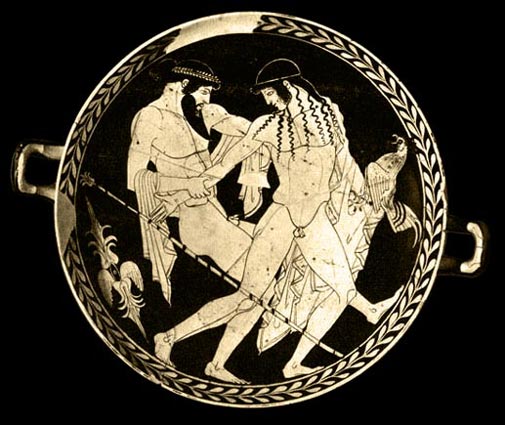
Costak and Lefteri Kaptan as Ganymede[1] and Zeus. The slaying of Lefteri kaptan adds another 'killing of the missing father' angle to the story.
[1]Ganymede
Trojan youth taken by Zeus as his cup-bearer (and lover), from Greek Ganymedes, perhaps a non-Greek name, or from ganymai "I rejoice, am glad" (related to ganos "brightness; sheen; gladness, joy; pride") + medea (plural) "counsels, plans, cunning" (see Medea); taken in Greek folk-etymology to mean "delighting in genitals." Used figuratively of serving-boys (c. 1600) and catamites (1590s). Associated with Aquarius in the zodiac. As the name of one of the four large satellites of Jupiter, by 1847.
catamite (n.)
"boy used in pederasty," 1590s, from Latin
Catamitus, corruption of Ganymedes, the name of the beloved cup-bearer of
Jupiter (see Ganymede). Cicero used it as a contemptuous insult against
Antonius.
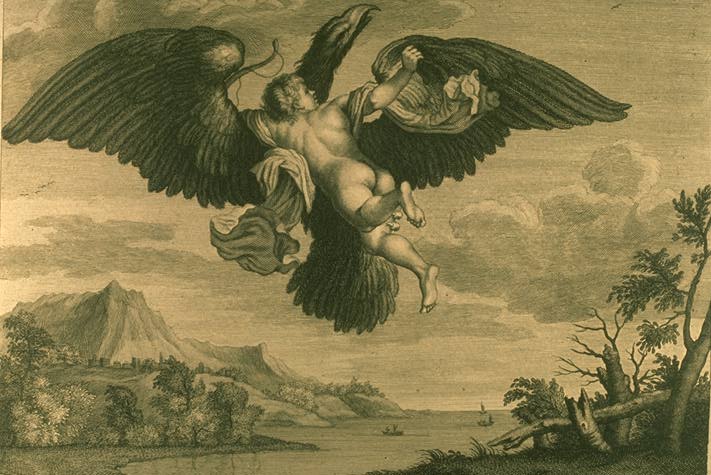
Ganymede by Mia Gibson
Ganymede is the young, beautiful boy that became one of Zeus' lovers. One source of the myth says that Zeus fell in love with Ganymede when he spotted him herding his flock on Mount Ida. Zeus then came down in the form of an eagle or sent an eagle to carry Ganymede to Mount Olympus where Ganymede became cupbearer to the gods. According to other accounts, Eos kidnapped Ganymede, to be her lover, at the same time she kidnapped Tithonus. Zeus then robbed Eos of Ganymede, in return granting Eos the wish that Tithonus be immortal. Unthinkingly, Eos forgot to ask that Tithonus remain youthful. Everyday, the faithful Eos watched over Tithonus, until one day she locked him in a room and left him to get old by himself.
Upon hearing that Ganymede was to be cup bearer as well as Zeus' lover, the infinitely jealous Hera was outraged. Therefor Zeus set Ganymede's image among the stars as the constellation Aquarius, the water carrier. Aquarius was originally the Egyptian god over the Nile. The Egyptian god poured water not wine from a flagon.
All of Zeus' scandalous liaisons have allegorical meanings. Some sources say that Zeus' affair with Ganymede was a (religious) justification for homosexuality within the Greek culture, yet others state that this is merely a reflection of Greek life at that time. Before the popularity of the Zeus and Ganymede myth spread, however, the only toleration for sodomy was an external form of goddess worship. Cybele's male devotees tried to achieve unity with her by castrating themselves and dressing like women.
Apollodorus argued that this myth emphasized the victory of patriarchy over matriarchy. This showed that men did not need women to exist, therefor they did not need the attentions of women. The philosopher Plato used this myth to justify his sexual feelings towards male pupils.
Subscribe to:
Posts (Atom)