Mt. Athos
Petri stays at Haci Kosta Vatakis
Petri grows beard
Vatakis has a young priest's helper (comez) called Apostolos
Apostolos (Vatakis calls him Spartakus)
Petri and Apostolos are bed mates
Avenges look for Petri for more deaths
Zahari arrives and befriends Apostolos
The two plot a plan to kill Petri

Saturday, June 10, 2006

1876 | Petri the Knife
1876 s/s Galicya, Austrian ship arrives in Beirut
Beirut Petri meets a young prostitute in a bordello
Prostitute tips Petri about an avenger
Beirut Murder #4 | Anesti
Knife
at sea Escape as a sailor
Italian Ship of Captain Humberto
at sea Saloniki-Istanbul run of the ship
Esther the singer on the boat
Esther to sing at Princci Casiono
Petri and Esther make love
at sea Ester becomes Petri's kept woman
Petri never stays at Esther's over the night
Dolabdere Petri finds home at a Dolabdere shack
Petri sees an avenger at Cadde-i Kebir
Pera Murder #5 | Toma
Knife
Murder night at Esther's
Pera Following night at Pirincci Casino
A Turk harasses Esther
Galata Murder #6 | Turk
Gun murder
Galata Esther's police interrogation
Galata Murder closes Pirincci Casino
Galata Esther decides to return to Saloniki
Galata Gem stone to Kaloferia
Dolabdere Rape of Peruz
Pera Peruz at the photo studio
Galata Zambo finds about the avengers
Arnavudkoy Zambo sets a trap invites Petri
Petri arrives one night
Arnavudkoy Murder #7 | Argiri Papazi
Knife
Arnavudkoy Murder #8 | Zambo
Knife
Pera Raif identifies Petri based on Esther's description
Raif hesitates between arrest and shoot to kill
Pera Petri evades arrest by Raif
Pera Petri finds refuge at Russian Embassy
Authorities request Petri's delivery to police
Pera Petri has Austrian Passport
Pera Petri sent to Austrian Embassy
Pera Police kept in the dark by the Russian Embassy
Pera Petri meets Dragoman Nicola
Dragoman is in love with Petri just like Lefteri
Safe passege arranged in two days to Trieste
Galata Nicola takes Petri to a bar
Galata Petri wants to get picture of Peruz before the voyage
Dolapdere Petri returns to Dolapdere shack
Dolabdere Raif coming out of shack
Dolabdere Ambush at the well
Dolabdere Murder #9 | Raif
Knife to the heart
Galata Nicola waits. Petri returns to bar
Sirkeci? Nicola and Petri photo at Vafiadis
Embassy officers take Petri to s/s Tirol
Esther is a deck passanger on s/s Tirol
at sea Murder #10 | Esther
Knife to the heart
Dardanelles Petri jumps to dark waters
Galata Petri assumed dead due to strong currents of the straits
Galata Police report stamped "dead' and closed
Aegean sea Petri lives by grabbing a passing row boat
Cretan Huseyin Arnabudaki Kaptan finds Petri in the boat
Arnabudaki kaptan leaves Petri in a Sisam fisherman's village
Sisam Island Petri changes name to Kiryako
Sisam Island Petri in love with prostitute Aspasya
Sisam Island Avengers at Sisam and Kiryako knows that petri is in danger
Hristodolos is one of Kiryako's "beau"s
Sisam Island Escape from Sisam with Hristodolos
at sea Hristodolos agrees to take Petri to Mt. Athos
at sea Petri becomes Hristodolos' zenane
Mt. Athos Hristodolos becomes a monk
Thursday, June 01, 2006
1854-1875 | Petri the Knife
1854 Ayamavri
Petri's mother raped
1855 Ayamavri
Petri's birth
Mother works as a prostitute
1868
Life with Petri
Mother has a client
Petri sent to Daskalos
Daskalos rapes Petri
Petri works at sailors café
1869
Petri's mother killed
Petri lives at Daskalos' home
1871
Ayamavri Murder #1 | Ispiro | Knife to the heart
Villagers support Petri
Lefteri takes Petri to his ship
Petri becomes Lefteri's zenane
Lefteri is a pirate
1872 at Sea
1873 at Sea
After 4 years as a zenane
1874
Petri and Lefteri arrives to Galata
Murder #2 | Lefteri
Petri steals Lefteri's gem and gold belt
Kalopedi, a ruffian in a sailor's den
Galata
Murder #3 | Kalopedi | Gun murder
A bum introduces Zambo, the caviar vendor
Zambo finds an escape boat
Return to Ayamavri
Avangers after Petri
A fishermen helps Petri to escape
Catania
Petri goes to Catania
Trieste
Petri goes to Trieste
Changes name to Pietri Mavri
Austrian Maritime Shipping hires Petri
Petri starts work as a stoker
1875
at sea s/s Galicya
Costumes for Costak | 6

Cargees, or Watermen of the Bosphorus

Sketch in A Coffee-House, Constantinople

Seller of Sweetmeats, Constantinople
Sketches of character and costume in Constantinople, Ionian Islands &c. from the original drawings made on the spot by Capt'n. Forbes Mac Bean, 92nd Highlanders, lithographed by J. Sutcliffe (published 1854)
Costumes for Costak | 5

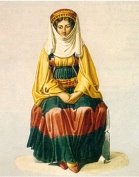
Greek bride from Pera (Turkey). 1799 & earlier
Published Date: 1859-1860 From Costumes anciens et modernes : habiti antichi e moderni di tutto il mondo. (Paris : Firmin Didot, 1859-1860.) Vecellio, Cesare (ca. 1521-1601), author.

Monastir ; Thessalien. Published Date: 1913


Costumes for Costak | 1

Printed on border: "Trachten XX. Costumes XX." Written on border: "[fig.] 1. Greek Islands. [fig.] 2. Turkey in Europe. [fig.] 3. Druses, Turkey in Asia. [fig.] 4. Turkey in Asia."
Source: From Bilderbuch für Kinder : enthaltend eine angenehme Sammlung von Thieren, Pflanzen, Blumen, Fruchten, Mineralien, Trachten und allerhand andern unterrichtenden Gegenstanden aus dem Reiche der natur, der Kunste und Wissenschaften. (Weimar, Germany : Industrie-Comptoir, 1792-1843.) Bertuch, Friedrich Justin (1747-1822), author.

Costume that once belonged to an Aid-de-Camp of Capodistria, First Governor of Greece. Museum of Popular Art, Nafplio, Greece. Special features of this costume are the long foustanella and the silk turban worn by the wealthy around their fez. Over the red silk sash men wore a gold selachi finely embroidered.
This particular costume has three jackets: the inner ghileki, second the fermeli with sleeves worn properly (not thrown over the shoulders), and the fermeloto guileki worn on top.

Bride's costume, Attica, c. 1890, Museum of Folk Art, Athens
Life of Petri 1855-1880| An Ottoman Chronolgy

1853: Start of the Crimean War with Russia, which, though won with British, French and Sardinian aid, further demonstrated how backward the Ottoman military had become.
1856: Establishment of a united Romanian autonomous state.
Abdulmecid Ottoman sultan (ruled 1839-1861)
Abdülaziz Ottoman sultan (ruled 1861–76)
Balkan discontent was fanned by nationalist agitation supported by Serbia and by émigré Slav organizations. It culminated in uprisings largely of Christian peasants against Muslim lords in Bosnia and Herzegovina (July 1875) and in Bulgaria (August 1876). Ottoman efforts to suppress the uprisings led to war with Serbia and Montenegro (July 1876) and to attempts by European powers to force Ottoman reforms.
1876 : Occupation of Cyprus by Britain. Perhaps more significant than external changes were the internal political developments that brought about the first Ottoman constitution on Dec. 23, 1876
Mehmed Murad V Ottoman sultan (ruled May 30- August 31 1876).
Abdülhamid II Ottoman sultan (ruled 1876–1909)

(clipping above) Troops from Jerusalem arriving at Stamboul, Constantinople.
1877: Another war with Russia (Russo-Turkish War, 1877–1878).
1878: March 3 Treaty of San Stefano - recognition of Romanian and Serbian independence, as well as the establishment of an autonomous Bulgarian principality under nominal Ottoman protection. Austria-Hungary occupies Bosnia by default.
1881: As the Empire celebrates its 600th anniversary, Tunisia becomes a French colony. (December 1881) the Ottoman public debt was reduced from £191,000,000 to £106,000,000, certain revenues were assigned to debt service, and a European-controlled organization, the Ottoman Public Debt Administration (OPDA), was set up to collect the payments.


Wednesday, May 31, 2006
Tatavla | The Maniots
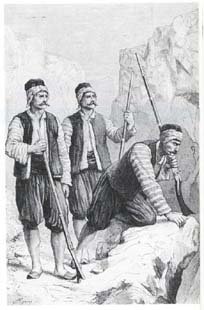 The inhabitants of Tatavla where Petri found refuge and anonimity were mainly resettled by the Ottomans with the Greeks of Mani region. They worked mostly at the admiralty shipyards of Kasimpasa by Halic/Golden Horn. The region where they came was mountainous and inaccessible hence they historically must have developed sailing skills. Homer's "Catalogue of ships in the Iliad mentions the cities of Mani: Messi, Vitilon (Itilo), Kardamli (or Skardamoula), Enopi, Gerinia, Pefnos, Avia, Githio, Kotronas, etc.
The Maniots (or Maniates; Greek: Μανιάτες)
The Mani Peninsula, also known as Maina, is a region in Greece. The Mani is the central peninsula of the three which extend southwards from the Peloponnese in southern Greece. The name "Mani" is thought to have originally meant "dry" or "treeless." Administratively, The Mani is divided between the districts of Laconia and Messenia. Messenian Maniot surnames almost uniformly end in -eas, whereas Laconian Maniot ones in -akos.
Homer refers to a number of towns in the Mani region. The area was occupied by the Dorians in about 1200 BC, and became a dependency of Sparta. The Mani was self-governing for a time before being absorbed into the Roman Empire in the 2nd century. As the power of the Byzantine Empire declined in the 9th century AD, the fortress of Maini in the south became the area's centre. After the fall of Constantinople to the Fourth Crusade in 1204, Italian and French knights (known to the Greeks as Franks), occupied parts of the Peloponnese. In 1249 the Mani was occupied by the Venetians, who made it one of the twelve baronies of the Principality of Moreas and built the fortresses of Mystras, Passavas, Gustema (Beaufort) and Megali Maini.
 In 1460 Mystras fell to the Ottomans, but the Mani was not subdued and retained its internal self-government in exchange for an annual tribute. The Maniots continued to bear arms and sporadically refused to pay levies and taxes imposed by the Ottomans. The Maniots survived by becoming pirates. Very ferocious closely-knit clans united by blood evolved. Local chieftains or beys governed Mani on behalf of the Ottomans. As Ottoman power declined, the mountains of the Mani became a stronghold of the kleftes, bandits who also fought against the Ottomans. There is evidence of a sizeable Maniot emigration to Corsica sometime during the Ottoman years. The last bey of Mani, Petros Mavromichalis was among the leaders of the Greek War of Independence. He proclaimed the revolution at Areopoli on 17 March 1821. The Maniots contributed greatly to the struggle, but once Greek independence was won they wanted to retain their local autonomy. During the reign of Ioannis Kapodistrias they violently resisted outside interference. The Mani's local autonomy was abolished in 1870, and the area gradually became a backwater as the inhabitants abandoned the land through emigration.
Etymologically, the name "Maniot" is a diminutive implying "of Mani". Geographically, the peninsula itself is an extension of the Taygetus mountain range. Throughout history, the Maniots have been known by their neighbors and their enemies as fierce warriors, proudly independent, who practice blood feuds – so fierce and savage, in fact, that they have been compared to the Nordic Berserkers. At times they were even referred to as the "super soldiers" of the 15th, 16th, 17th, 18th and early to mid 19th centuries. Napoleon Bonaparte addressed to them as "Spartan descendants" and Theodoros Kolokotronis (leader of the Greek War of Independence) called them "The Spartans".
Their surnames uniformly end in "-eas" in what is now the Messenian part of Mani, "-akos" in what is now the Laconian part of Mani and the occasional "-oggonas". The Maniot "-akos" is not to be confused with the Cretan "-akis", which was introduced into Mani by the first Cretan refugees who fled Crete once the Ottomans eventually fully occupied Crete in 1669. The Maniot "akos" denotes strength, power andmasculinity as opposed to the Cretan "akis" which denotes weakness, being small, and being effeminate in nature.
During the early modern period, the Maniots were renowned pirates with Oitylo having the nickname Great Algiers. For the most part, the Maniots lived in fortified villages (and "house-towers") where they defended their lands against the Ottomans and even against the armies of William II Villehardouin .Dances
Two dances come from Mani: Palio Maniatiko (meaning "Old Maniot") and the Modern Maniatiko. The Palio Maniatiko is only found in Mani and is described as an ancient dance. The Modern Maniatiko is the modern version of the Palio Maniatiko dance and includes certain aspects of the Kalamatiano dance in it. Like the Palio Maniatiko, it is only performed in Mani.
Piracy
"If any ship come to anchor on their coast, many arm themselves and go to the place, over against where the ship doth ride; some of them will be in priests habits, walking by the sea side, with their wallets, in which they will have some wine and bread. Their companions lye hid behind the bushes at some convenient post. When any strangers come ashore, who do not understand their language, the feigned priests make signes to them, shewing them their bread and wine, which they offer to them for money, by which the strangers being enticed from the sea side (and it may be to sit down and taste their wine) the hidden Manjotts come and make their prey. The priests will seem to be sorry, and endeavor to make the strangers to believe they were altogether ignorant of any such design. So a white flagg is put out, and a treaty held with the ship for their ransome. The priests endeavor to moderate the price, showing a great deal of respect to their companions, who are clothed in Turkish habits. Many ships have been thus served." Bernard Randolph, Present State of the Morea.
Part of Maniot culture involved piracy. The Maniots were famous and fearsome pirates whose ships dominated the Maniot coastline. The Maniots became pirates because Mani was not a very fertile land and the Maniots did not have many natural resources. The Maniots considered piracy a legitimate response to the fact that their land was poor, and it became their main source of income.[83] The pirate raids were not stopped by the local priests of the Eastern Orthodox Church, who in fact blessed the ships before they left and sometimes accompanied them on raids. Most of the Maniot pirates came from Messa Mani.[84] The main victims of Maniot pirates were the Ottomans, but the Maniots also targeted ships of powerful European countries.
Superstition
The Maniots are a very superstitious people. Maniots mainly believe in witches, demons, vampires, and ghosts. When Henry Herbert, 3rd Earl of Carnarvon, was touring Mani in 1839, he found a fresh egg by the side of the road and offered it to a Maniot soldier who escorted him, who declined the offer claiming that if a hag had enchanted it he would have to marry her. The Maniots thought that certain areas were haunted by demons.
Vendettas
Another important aspect of Maniot culture were the vendettas which frequently plagued Mani. Usually, the decision to start a vendetta was made at a family gathering. The main aim of a vendetta was usually to wipe out the other family. The families involved locked themselves in their towers and whenever they got the chance murdered members of the opposing family.[86] The other families in the village normally locked themselves in their towers in order not to get in the way of the fighting.
Some vendettas went on for months, sometimes years. In vendettas, the families could have a truce or treva, if one family needed to attend a religious ceremony or when it was time to harvest the crops. As soon as the treva ended, the killing could resume. Vendettas usually ended when one family was exterminated or when the defeated family left the town. Sometimes families came to terms, and vendettas stopped when the Turks invaded. The longest treva occurred when the Mavromichales declared war on the Turks in 1821. Vendettas continued after the liberation of Greece even though the Regency tried to demolish the towers.
Tuesday, May 30, 2006
Peruz | 2

Kalkin tayfalar
Gemi yapalar (yalpalar)
Icelim sarap
Olalim harap
Lariccom, trelelli hahahay!
Or
Misirimi kavururken
Dumanini savururken
Ayaklarim yoruluyor
Sokak sokak dolasirken
Bugday misir kitir kitir
Bugday misir citir citir!
Or
Ayna gibi supurgelerim var benim
Canto by Samran Hanim

Canto by Samran Hanim in Rast mode
OCAGIMA INCIR DIKTI
o-dja-gi-ma in-djir-dique-di
ya-vouk-li-gim beni-ter-quith-di
dewrth-sene-lique e-meque-le-rim
ey-vah bo-chou-na-mi ghit-di
Ocagima incir dikti
Yavuklugum beni terk etti
Dort senelik emeklerim
Eyvah bosuna mi gitti
Paralarimi hep yedi
Ben seni istemem dedi
Dun ben burada yok iken
Asirdi sandigi sepeti

Samran Kelleciyan Hanim (1870 Istanbul- March 14,1955 Istanbul)
Educated at Surp Lusavorcyan. After his divorce in 1895 found herself on stage with the support of her cousin Peruz and became one of the most famous Canto singers of Istanbul (1900-1925). married to Aleksan Hagopyan (1909). She also performed at the theaters of Sevki bey and Kel Hasan Companies and with Nasit Ozcan until 1935. She composed solos, duettos and cantos.
Sunday, May 28, 2006
Patriarchs of Constantinople
Patriarchs of Constantinople during the life of Petri 1855-1880
Anthimus VI (1845-1848, 1853-1855, 1871-1873)
Cyril VII (1855-1860)
Joachim II (1860-1863, 1873-1878)
Sophronius III (1863-1866)
Joachim III (1878-1884, 1901-1912)
Anthimus VI (1845-1848, 1853-1855, 1871-1873)
Cyril VII (1855-1860)
Joachim II (1860-1863, 1873-1878)
Sophronius III (1863-1866)
Joachim III (1878-1884, 1901-1912)
Saturday, May 27, 2006
Basil Zaharoff of Tatavla
 Petri was living on the fringes of Tatavla. The early life of Zaharoff gives a good indication of the opprtunistic life style and street smarts of the time.
Sir Basil Zaharoff, originally Zacharias Basileios, (1849, Muğla, Turkey - 1936, Monte Carlo, Monaco) was a Greek-Russian arms trader and financier, the director and chairman of the Vickers-Armstrong munitions firm during the World War I. It was said that he fuelled conflicts in order to sell weapons to both sides.
Early life
Basil was from a Greek family in Constantinople. The name Zaharoff was adopted when the family was in exile in Russia as a result of the anti-Greek Easter pogroms (1)of 1821. The family returned to Turkey in the 1840s and lived in the Anatolian town of Muğla. By 1855 the family was back in Constantinople where they lived in the poor quarter of Tatavla where Basil was a street kid.
Little Basil’s first job was as a guide for the tourists to the Galata, or prostitution district of Constantinople, helping his clients to find the forbidden pleasures that went beyond the bounds of normal prostitution. He was then to become a fireman. The 19th century firemen of Constantinople were not at all effective at extinguishing fires, but were quite effective at rescuing the treasures of the rich for a healthy commission. Many also engaged in protection rackets and outright robbery.
Basil then took on the job of a money changer. In this career there is an unverified accusation that he would pass counterfeit currency to tourists who would not notice until they were safely on a boat steaming away from Constantinople
(1) A pogrom (from Russian: meaning "wreaking of havoc") is a massive violent attack on a particular ethnic or religious group with simultaneous destruction of their environment (homes, businesses, religious centers). The term has historically been used to denote massive acts of violence, either spontaneous or premated, against Jews, but has been applied to similar incidents against other minority groups. Massive violent attacks against Jews date back at least to the Crusades or earlier, but the first pogrom is often considered to be the 1821 anti-Jewish riots in Odessa after the death of the Greek patriarch in Constantinople, in which 14 Jews were killed. St Gregory V, Archbishop of Constantinople, occupied the Patriarchal throne three times (1797-1799, 1806-1808, 1819-1821 AD). On the day of Holy Pascha, April 10, 1821 AD, St Gregory was hanged before the doors of the Patriarchate. Those doors have remained shut since that day. After three days, the Saint's body was sold to a Jewish mob, who dragged his body through the streets, then threw it into the sea.
Sait Faik | A Hilly Road to Dolapdere
Petri lived in a shack in Dolapdere's Bostan Neigborhood.
"Bir tarafında randevu evlerinin, öte tarafta umumi evlerin kaynaştığı bölge...Karidesçiler, elektrik amelesi, ekmekçi, sirkeci, marangoz çırağı, garson, berber, akordeoncu, kitaracı, bar artisti, revü figüranı, terzi çırağı gibi esnafın birbiri üzerine yığıldığı yokuşta, birbirine karışmış her din ve mezhep, Türk, Rus, Ermeni, Rum,Nasturi, Arap, Çingene, Fransız,Katolik, Levanten, Hırvat, Sırp, Bulgar, Acem, Efganlı, Çinli, Tatar,Yahudi, İtalyan, Maltız, daha her türlü milletin birbirine karıştığı bu garip mahalleden sel yatağına her akşam küçük figüran kızlar iner. Onların ve terzi kızların arkasından berber çırakları yürür; berber çıraklarının arkasına da burma bıyıklı bir Arnavut takılır."
Sait Faik Abasıyanık (18 November 1906 - 11 May 1954) was one of the greatest Turkish writers of short stories and poetry.
Thursday, May 25, 2006
Petri on Kathara Deftera Day
The day after Tyrofagis Sunday is Kathara Deftera (ΚΑΘΑΡΑ ΔΕΥΤΕΡΑ) which in Greek means "Clean Monday", and its the 1st day of Lent. End of February beginning of March. A first Monday for sure, not only the residents of Tatavla (1) but denizens of other neigborhoods (2) enjoys life at the bars like Ararat, Panoroma, Akrapolis, Paris, Lemonia. And Petri was hiding in Bostan District in a garden shack in half ruins. Did he don a mask and joined the crowds? Was Tahta Kilise/ Wood Church standing nearby? Church of the Annunciation of the Mother of God, at Tatavla foothils is not yet built in its place at the parish of the Virgin Evangelistria Propodon.
On this Shrove Monday (Kathara Deftera) He is alone and can only dream the flatbread (lagana), the kite, the olives, the fasolada and tarama salad…Picture of Peruz dimly lit by a window sill. Dragoman still waiting for him at a Kalyoncu Kulluğu dive? In love. Drunk?.. and suddenly a joyful Laterna music was heard...
Karoçeri Trava, na pame sta Tatavla
Posa Talira yirevis, ya na pas ke na mas feris!
Büyükdere ke Therapia; Tatavla ke Nihori
Afta ta tessara horia, pu stolizune tin poli
Carriage driver, take us to Tatavla
How many bills of five you need to take us there
Büyükdere and Tarabya; Tatavla and Yeniköy
Four places that make this city (İstanbul) real nice
Çek arabacı Tatavla'ya gidelim
Bizi oraya götürmek için kaç beşlik istersin
Büyükdere ve Tarabya; Tatavla ve Yeniköy
İstanbul'u güzelleştiren işte bu dört köy.
(1) Tatavla, area known in Byzantine times as the Tabula which means "horse stable" in Greek, is a cosmopolitan neighbourhood of Şişli today called Kurtulus whose population consists of Turks, Albanians, Armenians, Greeks, Assyrians, Kurds, Jews and Alevis. It was originally built as a residential area reserved for Ottoman citizens of Greek descent. First settled by Greeks from the Mani who worked in the Imperial Ottoman dockyards of Kasımpaşa. To the Greek visitor it aroused similar and even stronger emotions than the Rio dei Greci in Venice and the Griechengasse in Vienna. Till the mid 18th century Tatavla was one of the most distinctly working-class neighbourhoods - a legendary neighbourhood nonetheless, known indeed as 'legendary Tatavla'. It was remarkable for its dashing young men (Bishop Pamphilos Melissinos dubbed them "spirited and mettlesome "), young men who would not hesitate to take on the gendarmes who overstepped the bounds and became excessively oppressive, and for the efficiency of their volunteer fire-fighters and renowned housewives: 'a Tatavlian housewife' was high praise for the mistress of a house.
(2) Şakakları zülüflü, beli kuşaklı, bol paçalı Tatavla, Yenişehir, Papasköprüsü palikaryaları; pabuç kaşlı, gaga burunlu, pos bıyıklı Feridiye, Elmadağı, Pangaltı ahbarları; vapur dumanı fesli, göğsü çapraz camadanlı, yumurta ökçe şıpıdıklı tulumba reisleri; fiyakalı omuzdaşlar; saltalı, poturlu esnaf; frenk gömlekli, kravatlı kalem katipleri; kürklü yakalı, altın saat köstekli mirasyedi beyler; sırma kordonlu, çifter çifter madalyalı bıçkın hünkâr yaverleri..
SERMET MUHTAR ALUS Source: (İstanbul Yazıları, İBBKİDBY, 1994 / 19 Şubat 1944)
See also:
Greek Archives, Vol. 9: Constantinople in Old Recordings
and
Guardians of Hellenism, Vol. 5 This album has a good mix of popular music styles from Constantinople and its environs dating to the 18th and 19th century.
Tuesday, May 23, 2006
Istanbul Ansiklopedisi by Resat Ekrem Kocu
This is the cover of the issue where Petri the Knife, Galata Canavari article appears

Saim Turgut Aktansel, Sermet Muhtar Alus, Muzaffer Esen, İhsan Hamamîoğlu, Vâsıf Hiç, Mahmut Yesarî, Halûk Akbay, Mehmet Ali Akbay, Münir Süleyman Çapanoğlu, Osman Nuri Ergin, Enver Esenkova, Semavi Eyice, Ali Genceli, Ali Nüzhet Göksel, İbrahim Hakkı Konyalı, Burhanettin Olker, M.K. Özerengin, Kevork Pamukciyan, Ali Rıza Sağman, Eftim Lamboğlu, Reşat Mimaroğlu, Ali Orta, Ekrem Hakkı Ayverdi, Hakkı Raif Ayyıldız, Şükrü Nail Bayraktar, Fahri Düngelen, İsmail Ersevim, Celâlettin Germiyanoğlu, Hakkı Göktürk, Nuri Kavaf, Hüsnü Kınaylı, Eşref Mutlu, T. Yılmaz Öztuna, Neoklis Sarris, Cahide Tamer, Halûk Cemil Tanju, Şakir Tokmen, Süheyl Ünver, Ali Veren, M. Naci Ecer, Aziz Oğan, Nahit Sırrı Örik, B. Alacalı, Rebiî Baraz, Naşit Baylav, Pertev Nailî Boratav, Rüştü Dağlaroğlu, Feridun Dirimtekin, Behçet Evler, Reşit Halit Gönç, M. Baha Kâhyaoğlu, Hasan Kocaman, Neşat Halil Özkan, Mahmut Özlü, Mithat Sertoğlu, Halûk Şehsuvaroğlu, Hadi Tamer, İbrahim 17 Kevork Pamukciyan, Hilmi Tanışık, Osman Tolga, Tacettin Topaç, A. Cabir Vada, Zekaî Hakvar, Mehmet Koçu, Sadi Nazım Nirven, Şakir Tunççapa, Nihat Sami Banarlı, Salamon J. Becerano, Reşat Beyatlı, Ali Çamiç, Mehmet Çarıklı, Fahri Düngelen, H. Basri Erk, İhsan Hınçer, Tevfik Karkan, Muhittin Nalbantoğlu, Aysel Öz, Refi Cevat Ulunay, Kerim Yund, Ahmet Agın, Özay Aslan, Mehmet Bakir, Niyazi Ahmet Banoğlu, Sadi Borak, Ahmet Refik Gamsızoğlu, Ayşe Göknarlı, Ergin Kanlıcaoğlu, Hikmet Şinasi Önol, Mehmet Şükrü Silan, Ahmet Baha Gökoğlu, Ferdi Öner, Nurettin Yatman, A. Ziynet Abdullah, Şinasi Akbatu, Mustafa Cihanbeyli, Behçet Elver, Halit Eraktan, Ahmet Güreli, Tahsin Kaya, Salim Rıza Kırkpınar, Nuriye Nirven, Hasan Toper, Ahmet Derviş Ateşçi, İbrahim Baytekin, İhsan Birinci, Salim Erdem, Mehmet Ali Göktuna, Sahak Güllü, Zeki Karagülle, Aykut Karpat, Doğan Kenigut, Ali Payanda, N. Sağmalcılı, Bediî Şehsuvaroğlu, Mümtaz Zeki Taşkın, Erdem Yücel, Osman Cemal Kaygılı, Vladimir Mirmiroğlu, Bedros Nişanyan, Servet [Soyadı bilgisi yok.], Hafi Kadri Alpman, Mesut Ayabakan, Nazmi Çağan, H. Basri Çileli, Çelik Gülersoy, Sadi Irmak, Sami Kurtulan, Mehmet Suud.
ILLUSTRATORS (sketches and some drawings by R.E.Kocu)
Ferzan Baydar, Sabiha Bozcalı, Aydın Burteçene, Behçet Cantok, H. Çizer, H. Hüsnü, Nezih İzmirlioğlu, A. Bülend Koçu (Reşad Ekrem Koçu), Reşat Sevinçsoy, Abdullah Tomruk, Salih Sinan, O. Zeki Çakaloz, Hâşim, Kemal Zeren, Turan Açıksöz, Münif Fehim, F. A., H. A., M. Kayalar, Kemal Külmat, Bülent Şeren, Zeki Yönet, Özay Aslan, Nuriye Nirven, Ömer Tel, Agop Arad, Sabih Büyükerbil, Salim Erdem, Turan Açıksöz, Yaşar Ekinci, Tekin Gökçen, H. Kutay, Serpil Büyükerbil, Halit Eraktan.

First Edition 1944 - 1951 (Larger format and better quality paper)
About 4 Volumes 1088 pages
Aba -Bahadir Sokagi
last issue Number 34
Ed. Resat Ekrem Kocu
Second Edition
(issue information corrected and updated Dec 27,2006)
Volume 1
Istanbul Ansiklopedisi Ed. Resat Ekrem Kocu Tan Matbaasi, 1958
Issues 1-16 pages 1-576 Aba - Alafranga
Volume 2
Istanbul Ansiklopedisi Ed. Resat Ekrem Kocu Tan Matbaasi, 1959
Issues 17-32 pages 577-1152 Alageyik Sokagi - Asik Efendi
Volume 3
Istanbul Ansiklopedisi Ed. Resat Ekrem Kocu Tan Matbaasi, 1960
Issues 33-48 pages 1153-1732 Asiret Mektebi - Baba
Volume 4
Istanbul Ansiklopedisi Ed. Resat Ekrem Kocu Tan Matbaasi, 1960
Issues 49-64 pages 1733-2308 Baba - Bayrampasa Medresesi
Volume 5
Istanbul Ansiklopedisi Ed. Resat Ekrem Kocu Tan Matbaasi, 1961
Issues 65-80 pages 2309-2884 Bayrampasa - Bogazici
Volume 6
Istanbul Ansiklopedisi Ed. Resat Ekrem Kocu Tan Matbaasi, 1963
Issues 81-96 pages 2885-3469 (3470 blank) Bogazicinde iskele Kayik ve Sandallari - Cemil Bey
Volume 7
Istanbul Ansiklopedisi Ed. Resat Ekrem Kocu Tan Matbaasi, 1965
Issues 96-112 pages 3471-4036 Cemil Bey - Ciroz
Volume 8
Istanbul Ansiklopedisi Ed. Resat Ekrem Kocu Tan Matbaasi, 1966
Issues 113-128 pages 4037-4609 Ciroz - Dis
Volume 9
Istanbul Ansiklopedisi Ed. Resat Ekrem Kocu Tan Matbaasi, 1968
Issues 129-144 pages 4613-5188 Disci - Eristeci
Volume 10
Istanbul Ansiklopedisi Ed. Resat Ekrem Kocu Yaylacik Matbaasi, 1968
Issues 145-160 pages 5189-5760 Eritmek - Firinlar
Volume 11
Istanbul Ansiklopedisi Ed. Resat Ekrem Kocu Tan Matbaasi, Milli Egitim Matbaasi, 1971
(begins with issue 161) pages 5771-7076 7000 -7076 pagination error Firin - Gokcinar
WRITERS
(as mentioned in the cover of various issues) About 4 Volumes 1088 pages
Aba -Bahadir Sokagi
last issue Number 34
Ed. Resat Ekrem Kocu
Second Edition
(issue information corrected and updated Dec 27,2006)
Volume 1
Istanbul Ansiklopedisi Ed. Resat Ekrem Kocu Tan Matbaasi, 1958
Issues 1-16 pages 1-576 Aba - Alafranga
Volume 2
Istanbul Ansiklopedisi Ed. Resat Ekrem Kocu Tan Matbaasi, 1959
Issues 17-32 pages 577-1152 Alageyik Sokagi - Asik Efendi
Volume 3
Istanbul Ansiklopedisi Ed. Resat Ekrem Kocu Tan Matbaasi, 1960
Issues 33-48 pages 1153-1732 Asiret Mektebi - Baba
Volume 4
Istanbul Ansiklopedisi Ed. Resat Ekrem Kocu Tan Matbaasi, 1960
Issues 49-64 pages 1733-2308 Baba - Bayrampasa Medresesi
Volume 5
Istanbul Ansiklopedisi Ed. Resat Ekrem Kocu Tan Matbaasi, 1961
Issues 65-80 pages 2309-2884 Bayrampasa - Bogazici
Volume 6
Istanbul Ansiklopedisi Ed. Resat Ekrem Kocu Tan Matbaasi, 1963
Issues 81-96 pages 2885-3469 (3470 blank) Bogazicinde iskele Kayik ve Sandallari - Cemil Bey
Volume 7
Istanbul Ansiklopedisi Ed. Resat Ekrem Kocu Tan Matbaasi, 1965
Issues 96-112 pages 3471-4036 Cemil Bey - Ciroz
Volume 8
Istanbul Ansiklopedisi Ed. Resat Ekrem Kocu Tan Matbaasi, 1966
Issues 113-128 pages 4037-4609 Ciroz - Dis
Volume 9
Istanbul Ansiklopedisi Ed. Resat Ekrem Kocu Tan Matbaasi, 1968
Issues 129-144 pages 4613-5188 Disci - Eristeci
Volume 10
Istanbul Ansiklopedisi Ed. Resat Ekrem Kocu Yaylacik Matbaasi, 1968
Issues 145-160 pages 5189-5760 Eritmek - Firinlar
Volume 11
Istanbul Ansiklopedisi Ed. Resat Ekrem Kocu Tan Matbaasi, Milli Egitim Matbaasi, 1971
(begins with issue 161) pages 5771-7076 7000 -7076 pagination error Firin - Gokcinar
Saim Turgut Aktansel, Sermet Muhtar Alus, Muzaffer Esen, İhsan Hamamîoğlu, Vâsıf Hiç, Mahmut Yesarî, Halûk Akbay, Mehmet Ali Akbay, Münir Süleyman Çapanoğlu, Osman Nuri Ergin, Enver Esenkova, Semavi Eyice, Ali Genceli, Ali Nüzhet Göksel, İbrahim Hakkı Konyalı, Burhanettin Olker, M.K. Özerengin, Kevork Pamukciyan, Ali Rıza Sağman, Eftim Lamboğlu, Reşat Mimaroğlu, Ali Orta, Ekrem Hakkı Ayverdi, Hakkı Raif Ayyıldız, Şükrü Nail Bayraktar, Fahri Düngelen, İsmail Ersevim, Celâlettin Germiyanoğlu, Hakkı Göktürk, Nuri Kavaf, Hüsnü Kınaylı, Eşref Mutlu, T. Yılmaz Öztuna, Neoklis Sarris, Cahide Tamer, Halûk Cemil Tanju, Şakir Tokmen, Süheyl Ünver, Ali Veren, M. Naci Ecer, Aziz Oğan, Nahit Sırrı Örik, B. Alacalı, Rebiî Baraz, Naşit Baylav, Pertev Nailî Boratav, Rüştü Dağlaroğlu, Feridun Dirimtekin, Behçet Evler, Reşit Halit Gönç, M. Baha Kâhyaoğlu, Hasan Kocaman, Neşat Halil Özkan, Mahmut Özlü, Mithat Sertoğlu, Halûk Şehsuvaroğlu, Hadi Tamer, İbrahim 17 Kevork Pamukciyan, Hilmi Tanışık, Osman Tolga, Tacettin Topaç, A. Cabir Vada, Zekaî Hakvar, Mehmet Koçu, Sadi Nazım Nirven, Şakir Tunççapa, Nihat Sami Banarlı, Salamon J. Becerano, Reşat Beyatlı, Ali Çamiç, Mehmet Çarıklı, Fahri Düngelen, H. Basri Erk, İhsan Hınçer, Tevfik Karkan, Muhittin Nalbantoğlu, Aysel Öz, Refi Cevat Ulunay, Kerim Yund, Ahmet Agın, Özay Aslan, Mehmet Bakir, Niyazi Ahmet Banoğlu, Sadi Borak, Ahmet Refik Gamsızoğlu, Ayşe Göknarlı, Ergin Kanlıcaoğlu, Hikmet Şinasi Önol, Mehmet Şükrü Silan, Ahmet Baha Gökoğlu, Ferdi Öner, Nurettin Yatman, A. Ziynet Abdullah, Şinasi Akbatu, Mustafa Cihanbeyli, Behçet Elver, Halit Eraktan, Ahmet Güreli, Tahsin Kaya, Salim Rıza Kırkpınar, Nuriye Nirven, Hasan Toper, Ahmet Derviş Ateşçi, İbrahim Baytekin, İhsan Birinci, Salim Erdem, Mehmet Ali Göktuna, Sahak Güllü, Zeki Karagülle, Aykut Karpat, Doğan Kenigut, Ali Payanda, N. Sağmalcılı, Bediî Şehsuvaroğlu, Mümtaz Zeki Taşkın, Erdem Yücel, Osman Cemal Kaygılı, Vladimir Mirmiroğlu, Bedros Nişanyan, Servet [Soyadı bilgisi yok.], Hafi Kadri Alpman, Mesut Ayabakan, Nazmi Çağan, H. Basri Çileli, Çelik Gülersoy, Sadi Irmak, Sami Kurtulan, Mehmet Suud.
ILLUSTRATORS (sketches and some drawings by R.E.Kocu)
Ferzan Baydar, Sabiha Bozcalı, Aydın Burteçene, Behçet Cantok, H. Çizer, H. Hüsnü, Nezih İzmirlioğlu, A. Bülend Koçu (Reşad Ekrem Koçu), Reşat Sevinçsoy, Abdullah Tomruk, Salih Sinan, O. Zeki Çakaloz, Hâşim, Kemal Zeren, Turan Açıksöz, Münif Fehim, F. A., H. A., M. Kayalar, Kemal Külmat, Bülent Şeren, Zeki Yönet, Özay Aslan, Nuriye Nirven, Ömer Tel, Agop Arad, Sabih Büyükerbil, Salim Erdem, Turan Açıksöz, Yaşar Ekinci, Tekin Gökçen, H. Kutay, Serpil Büyükerbil, Halit Eraktan.
Subscribe to:
Posts (Atom)