Tuesday, December 30, 2025

Recommended | İstanΠόλις


HOME

This is a platform and network hub for historical studies about the Greek Orthodox communities of late Ottoman Istanbul / Constantinople (c. 1821-1923).

Here you will find links to the latest scholarship, memoirs, and primary source documents, as well as discussion and emerging scholarship about the many layers of community involving the Greek Orthodox of “The City” during the long nineteenth century. 

PEOPLE

Sample post: Kuzguncuk/Κουσκουντζούκ

Saturday, December 27, 2025

Word Origins | Kirmizi, Beyaz

Kırmızı: red EN[1]

i. (Ar. ḳirmiz > ḳirmizі “kırmızla ilgili”den)

1. Kan rengi, al renk: “Kırmızı ona hiç yakışmaz.”

2. kısa. (Trafikte) Kırmızı ışık: “Kırmızı yandı, dur!”

3. sıf. Bu renkte olan: Zil, şal ve gül. Bu bahçede raksın bütün hızı / Şevk akşamında Endülüs üç def’a kırmızı (Yahyâ Kemal). Kara sütunlar, kırmızı işâretler, mor noktalar ve çizgiler, çizgiler… (Refik H. Karay). Gemilerim kırmızı bayraklı (Orhan V. Kanık).

Kırmızı dipli bal mumu ile dâvet etmedik ya: Gelmesi için yalvarmadık ya.

Kırmızımsı sıf. (< kırmızı+msı) Kırmızıya çalan, kırmızıya kaçan.

Kırmızımtırak sıf. (< kırmızı+mtırak) Kırmızıya çalan, kırmızımsı.

Beyaz: white EN [2]

(ﺑﻴﺎﺽ) i. (Ar. beyāż)

1. Kar renginde olan rengin adı, ak. Karşıtı: SİYAH: “Beyaz ona çok yakışır.”

2. Teninin rengi açık olan kimse. Karşıtı: ESMER: Beyazların adı var / Esmerlerin tadı var / Yine geçme beyazdan / Esmerin inadı var (Mâni).

3. Bir yazının temize çekilmiş şekli. Karşıtı: MÜSVEDDE: Evvelâ müsveddesini gören ulemâ beyazını ricâ ettiklerinden dolayı “ha” harfine varıncaya kadar birinci cildi beyaz edilerek zamânın âlimlerine arzolunmuş idi (Kâtip Çelebi’den Seç.).

4. argo. Eroin.

5. sıf. Kar renginde olan, ak renkli: Gerer beyaz kuğular nâzenin boyunlarını (Yahyâ Kemal). Başında bulutlardan beyaz örtüsü / Büyük annem namaz kılmaktadır (Câhit S. Tarancı).

6. sıf. ve i. Beyaz ırktan olan (kimse): “Afrika beyazlara karşı direnmeye başladı.” Mısır vekîlinin yalısı da beyaz ve siyah bir halayık (…) kadrosuyle medeniyet ve ihtişam devirlerinin son merkezlerinden biriydi (Sâmiha Ayverdi).

Beyaz bayrak çekmek: Teslim olmak: Müdâfaa etmeye çalıştıkları kaleye beyaz bayrak çekmek zamânını sabır ve ıztırapla beklemekte idiler (Sâmiha Ayverdi). Beyaz (Beyazlar) giymek: Beyaz renkli elbise giymek: “Beyazlarını giy, sana çok yakışıyor.” Sarı giyme söz olur / Beyaz giyme toz olur (Mâni). 

Beyaz harf: matbaa. Baskıda açık renk (tabiî renkte) çıkan harf çeşidi [Koyusuna siyah harf denir]. 

Beyaz üzerine buyrultu: târih. Sadrâzamlar tarafından doğrudan doğruya verilen yazılı emir. Beyaz üzerine fermân-ı âlî (hatt-ı hümâyun): târih. 

Pâdişahların doğrudan doğruya kendileri yazmak veya yazdırmak sûretiyle verdikleri emir: Hekimbaşı efendiye beyaz üzerine fermân-ı âlî ısdârıyle tenbih ve te’kid (…) fî-mâba’d müceddeden tabip ve cerrah ve ispençiyar dükkânı küşat ettirilmemesi… (Mec. Um. Bel.). I. Abdülhamid, “Benim bir vaktim yoktur ki kalem elimden düşmez, vallâhü’l-azim düşmez” diyen ve en fazla beyaz üzerine hatt-ı hümâyun yazan dikkate değer bir şahsiyettir (Beşir Ayvazoğlu).

Beyaza çekmek (Beyaz etmek): eski. Müsvedde hâlinde olan bir yazıyı temize çekmek: Birinci cilt beyaz edilerek zamânın âlimlerine arzolunmuş idi (Kâtip Çelebi’den Seç.).

(Bem)beyaz Bk. BEMBEYAZ

Beyazımsı sıf. (< beyaz+ı+msı) Beyaza çalan, beyaza yakın, beyazımtırak.
Beyazımtırak sıf. (< beyaz+ı+mtırak) Beyaza yakın, beyazımsı.

[1] red(adj.1)

"of a bright, warm color resembling that of blood or of the highest part of the primery rainbow" [Century Dictionary], Middle English rēd, redde, read, reid, from Old English rēad, used of various shades of purple, crimson, scarlet, pink, etc.; also red clothes, dye, ink, wine, or paint, also "having a ruddy or reddish complexion; red-haired, red-bearded;" from Proto-Germanic *rauthan (source also of Old Norse rauðr, Danish rød, Old Saxon rod, Old Frisian rad, Middle Dutch root, Dutch rood, German rot, Gothic rauþs).

This is reconstructed to be from a PIE root *reudh- "red, ruddy," the only color for which a definite common PIE root word has been found. It also is the root of native ruddy, rust, and, via Latin, ruby, rubric, russet, etc.

Along with dead, bread (n.), lead (n.1), its long vowel shortened in or after Middle English. The surname Read, Reid, Reade, etc. represents the old form of the adjective and retains the original Old English long vowel pronunciation. It corresponds to Brown, Black, White; Red itself being rare as a surname. As the color designation of Native Americans in English from 1580s.

In fixed comparisons, red as blood (Old English), roses (mid-13c.), cherry (c. 1400). From Old English as the color characteristic of inflammation, blistering, etc. Of the complexion, lips, etc., "ruddy, rosy, red" (c. 1200); also of person with a healthy complexion or skin color; to be red in the face as a result of powerful emotion or agitation is by c. 1200; to see red "get angry" is an American English expression attested by 1898.

Red as the characteristic color of "British possessions" on a map is attested from 1885. Red-white-and-blue in reference to American patriotism, from the colors of the flag, is from 1840; in a British context, in reference to the Union flag, 1852.

crimson(n.)

"highly chromatic deep red color," early 15c., cremesin, "cloth dyed deep purplish-red," also as an adjective, "of a crimson color," from Old Italian carmesi, cremesi (c. 1300), later carmisino, cremesinus, "crimson color; cochineal dye," from Arabic qirmizī (see kermes). For similar transfer of the dye word to generic use for "red," compare Old Church Slavonic čruminu, Russian čermnyj"red," from the same source. The French form in 15c.-16c. when the word entered English was cramoisin. "The word in Italian came from Arabic, and the word in all other European languages came from Italian via exports of silk cloths from Italy." ["English Words of Arabic Ancestry"]

kermes(n.)

c. 1600, "shield louse (Coccus ilicis) that yields a red dye" (1590s of the tree on which the insects live), from Medieval Latin cremesinus (also source of French kermès, Italian chermes, Spanish carmes), from Arabic qirmiz "kermes," from Sanskrit krmi-ja a compound meaning "(red dye) produced by a worm."The word crimson traces back through Spanish, Arabic, Persian, and ultimately to Sanskrit, describing a deep red dye from the kermes insect, meaning "produced by a worm" (kṛmi-ja). It entered English in the Middle Ages (Middle English cremesin, Old French cramoisin) to name the prized color from the insect dye, signifying luxury, passion, and power in clothing.

Sanskrit: kṛmija (कृमिज) - "born of a worm" (kṛmi = worm, -ja = born/produced).

Middle Persian/Arabic: qirmiz / qirmizī (قرمزی) - referring to the kermes insect and its red dye.

Old Spanish/Medieval Latin:cremesín / carmesinus - adopted the Arabic term for the dye.

Old French: cramoisin - the French form of the word.

English: crimson / cremesin - entered English in the 15th century, initially for the dyed cloth, later the color itself.

Connection to Dye

The word's origin is tied to the kermes insect, which lives on oak trees and produces a vibrant red dye, highly valued for royal and ecclesiastical garments in medieval times.

Other words like carmine and even vermilion share similar roots from the same insect source, highlighting the importance of this dye in history.

[2] white(adj.)

 Middle English whit, "of the color of milk or snow, fully luminous and devoid of hue," from Old English hwit "bright, radiant; clear, fair," also as a noun (see separate entry), from Proto-Germanic *hweit-, according to Watkins from suffixed form of PIE root *kweit- "white; to shine."

As a surname, originally with reference to fair hair or complexion, it is one of the oldest in English, being well-established before the Conquest. By late 13c. as the color of hair in old age. In early use also the color of lustrous metal, especially "silver," hence such expressions as white the hand "bribe" (early 14c.).

The meaning "morally pure" was in Old English. In Middle English the figurative use was "gracious, friendly, favorable." The color's association with royalist causes dates to late 18c.

The slang sense of "honorable, fair" is by 1877, American English, based on race prejudice. The meaning "of those races (chiefly European or of European extraction) characterized by light complexion" is recorded from c. 1600; the meaning "characteristic of or pertaining to white people" is from 1852, American English. White folks for "white people" in Black English is by 1929.

White supremacy is attested from 1868 [John H. Van Evrie, M.D., "White Supremacy and Negro Subordination," New York, 1868]. White-chauvinism is by 1946. White flight of caucasians out of inner-city areas is attested by 1966, American English. White privilege, "preferential treatment of caucasians" is from 1960, originally in South African contexts, although there is an isolated American use from 1928.

White way "brightly illuminated street in a big city" is from 1908. The white flag of truce or surrender is attested from c. 1600. White lie is attested from 1741. White Christmas in reference to snow is attested from 1847. White water "river rapids" is recorded from 1580s. White lightning "inferior whiskey" is from 1921.

White Russian "language of Byelorussia" is recorded from 1850; the mixed drink is by 1968 (with the note of the alternative name Russian Bear.) Astronomical white dwarf is from 1924. White witch, one who uses the power for good, is from 1620s. White House as the name of the U.S. presidential residence is recorded from 1811.

Germanic cognates include Old Saxon and Old Frisian hwit, Old Norse hvitr, Dutch wit, Old High German hwiz, German weiß, Gothic hveits.

The PIE root is also reconstructed to be the source of Sanskrit svetah "white;" Old Church Slavonic sviteti "to shine," svetu "light;" Lithuanian šviesti "to shine," švaityti "to brighten."

white(adj.)


Middle English whit, "of the color of milk or snow, fully luminous and devoid of hue," from Old English hwit "bright, radiant; clear, fair," also as a noun (see separate entry), from Proto-Germanic *hweit-, according to Watkins from suffixed form of PIE root *kweit- "white; to shine."

As a surname, originally with reference to fair hair or complexion, it is one of the oldest in English, being well-established before the Conquest. By late 13c. as the color of hair in old age. In early use also the color of lustrous metal, especially "silver," hence such expressions as white the hand "bribe" (early 14c.).

The meaning "morally pure" was in Old English. In Middle English the figurative use was "gracious, friendly, favorable." The color's association with royalist causes dates to late 18c.

The slang sense of "honorable, fair" is by 1877, American English, based on race prejudice. The meaning "of those races (chiefly European or of European extraction) characterized by light complexion" is recorded from c. 1600; the meaning "characteristic of or pertaining to white people" is from 1852, American English. White folks for "white people" in Black English is by 1929.

White supremacy is attested from 1868 [John H. Van Evrie, M.D., "White Supremacy and Negro Subordination," New York, 1868]. White-chauvinism is by 1946. White flight of caucasians out of inner-city areas is attested by 1966, American English. White privilege, "preferential treatment of caucasians" is from 1960, originally in South African contexts, although there is an isolated American use from 1928.

White way "brightly illuminated street in a big city" is from 1908. The white flag of truce or surrender is attested from c. 1600. White lie is attested from 1741. White Christmas in reference to snow is attested from 1847. White water "river rapids" is recorded from 1580s. White lightning "inferior whiskey" is from 1921.

White Russian "language of Byelorussia" is recorded from 1850; the mixed drink is by 1968 (with the note of the alternative name Russian Bear.) Astronomical white dwarf is from 1924. White witch, one who uses the power for good, is from 1620s. White House as the name of the U.S. presidential residence is recorded from 1811.

Germanic cognates include Old Saxon and Old Frisian hwit, Old Norse hvitr, Dutch wit, Old High German hwiz, German weiß, Gothic hveits.

The PIE root is also reconstructed to be the source of Sanskrit svetah "white;" Old Church Slavonic sviteti "to shine," svetu "light;" Lithuanian šviesti "to shine," švaityti "to brighten."

Thursday, December 11, 2025

The story of Ottoman Athos


Extract

The Holy Mountain

The story of Ottoman Athos

For more than a millennium Ayanoros, better known to the West as Mount Athos, has been a spiritual beacon to Orthodox believers. Yet the world’s oldest political entity flourished most brilliantly under Ottoman rule. Two scholars who have had a lifelong interest in this jealously isolated community give a unique insider’s view. Anthony Bryer, the eminent Byzantanist, who visited Mount Athos for the first time 40 years ago and found this extraordinary community on the brink of the 20th century, gives a personal account. Graham Speake, as secretary of the Friends of Mount Athos, has been in a privileged position to take the photographs

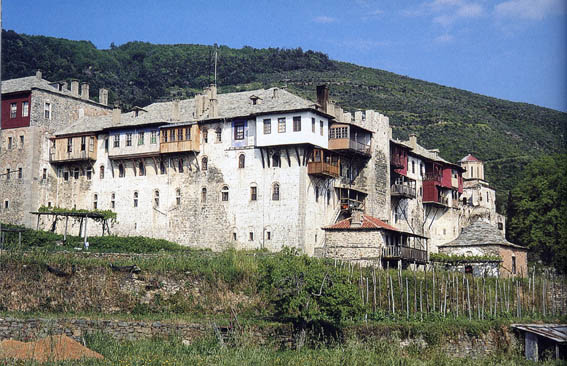
  • Balconies projecting from the upper storeys of the monastery of Xeropotamou give it the appearance of a grand Ottoman country house
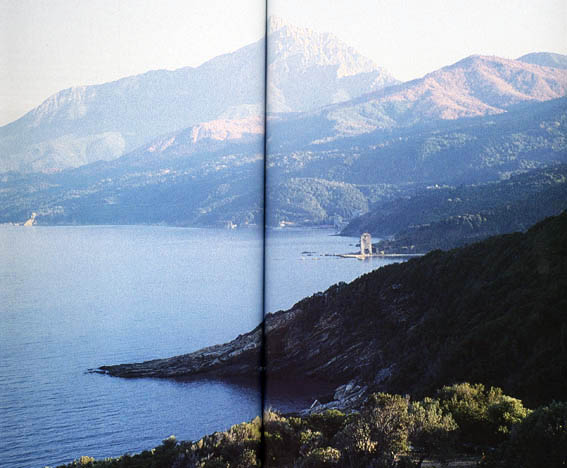
  • Looking south across the Athos peninsula. Rising out of the Aegean to a height of 6,000 feet, this has long been a place of refuge for hermits, ascetics, monks and sundry silentiaries. This view is from Stavrokikita, the last of the 20 ruling monasteries, founded in 1541
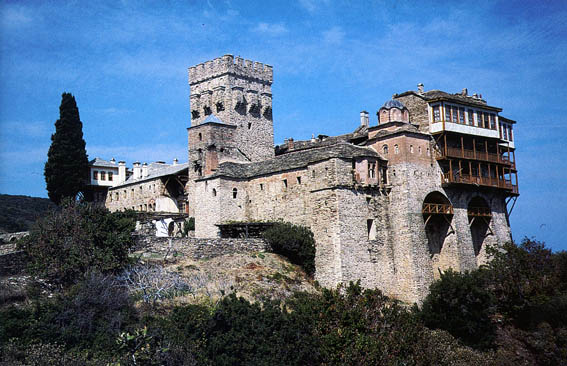
  • In Ottoman times, the monastery of Stavronikita relied for its income on the empire;s Danube principalities

Mount Athos is a peninsula east of Salonica cloaked in forests of oak and topped by a cloud-wreathed marble peak rising 2,033 metres out of the Aegean Sea. Since the tenth century, hermits and communities of monks have settled here. It is not the stunning beauty of the place that has attracted them, so much as the ascetic convenience of the Holy Mountain. A safe haven from the world, and the home since the 14th century of the influential Quietist movement, Athos has been a spiritual exemplar for the Byzantine and all Orthodox churches.

In 1958 I wanted to get to Byzantium: very fast. Between laying down pen as a National Serviceman and taking up arms as an undergraduate, there was not time to visit Turkey or Greece, but just enough to grow a beard and get to Athos.

Here was living Byzantium, where distances were measured in hours along ribbed mule tracks, where the hours of night were anyway only approximate at the solstices, where all clocks were wrong and the sure time was sunset, when the gates of the miniature walled towns called monasteries shut, leaving you out for the night on a bare mountain. So on August 19, AM 7466 of the Byzantine calendar, I presented myself to the Holy Fathers, who affixed a four-part seal to my visa to Athos, only the 748th issued that year.

I had spent the previous night (being September 1, 1958 AD, secular time) in the tower of Andronikos II at Prosphori. The difference of date (which is why the Russian October Revolution actually happened in November) gave just enough time to grow a beard out of which a comb kept falling, to demonstrate my gender, for women and eunuchs do not cross the border at Prosphori…

Here was living Byzantium, where distances were measured in hours along ribbed mule tracks, where the hours of night and day were anyway only approximate at the solstices, where all clocks were wrong and the only sure time was sunset, when the gates of the miniature walled towns called monasteries shut, leaving you out for the night on a bare mountain…

Monday, December 11, 2023

İstanΠόλις


Mavi Boncuk |

(link is external)) collaborative lead by Christine Philliou

This is a platform and network hub for historical studies about the Greek Orthodox communities of late Ottoman Istanbul/Constantinople (c. 1821-1923). Here you will find links to the latest scholarship, memoirs, and primary source documents, as well as discussion and emerging scholarship about the many layers of community--legal, administrative, and ecclesiastical, but also social, cultural, and political--in which the Greek Orthodox of The City of the long nineteenth century were involved. Data projects about the historical demography, residential and migration patterns, and professional and class identities of Rum residents will be displayed here. While this site serves as a clearinghouse and an incubator for data, mapping, and other Digital Humanities and conventional scholarly projects related to the Greek Orthodox of Istanbul, it is meant to connect up to the many other projects underway that map the many other communities in the same urban space. It is also meant to make accessible the wealth of knowledge in Greek-language histories of the constituent parish and neighborhood communities of the city, and to bring those together with Ottoman state archival materials, to work toward a three-dimensional understanding of what community meant, and how it worked, and changed, for Greek Orthodox Christians in the final century of the Ottoman Empire. We are open to considering new proposals for subgroups/research teams on relevant topics, so please contact us with your ideas!


Further Resources for Research on Constantinopolitan Greeks 


Christine Philliou


Christine Philliou, Professor in the Department of History at University of California Berkeley and Director of the Modern Greek/Hellenic Studies and Turkish, Ottoman and Post-Ottoman Studies (TOPOS) programs there, specializes in the connected histories of the Balkans and Middle East since the 17th century, focusing particularly on the emergence of the Greek and Turkish nation-states out of the Ottoman Empire in the 19th and 20th centuries. She has worked, and is interested more broadly in comparative empires and in interfaces between cultures and histories in Europe and the Middle East. Her books, Biography of an Empire: Governing Ottomans in an Age of Revolution (2011), and Turkey: A Past Against History (2021), have been translated into both Greek and Turkish, and she has published widely in scholarly journals as well as in broader forums such as PublicBooks and Jadaliyya. 


Firuzan Melike Sümertaş


Firuzan Melike Sümertaş is currently a lecturer in the Department of History at University of California Berkeley and Assist. Prof. in the Department of Interior Design at Istanbul Kent University. Her research focuses on the urban/architectural/visual culture of the late Ottoman Empire and its capital city Istanbul, with a particular interest in the Greek-Orthodox community. She holds a PhD. in History from Boğaziçi University, Istanbul and B.Arch and M.A degrees from Middle East Technical University in Ankara, Department of Architecture, and Program in Architectural History. Besides IstanΠόλις, she collaborates with Namık Erkal, Haris Theodorelis Rigas and ANAMED at Koç University, Istanbul under the project entitled “Phanariot Materialities.”


Panagiotis Poulos


Panagiotis C. Poulos is Assistant Professor in Ethnomusicology at the Department of Music Studies at the National and Kapodistrian University of Athens. He studied ethnomusicology with a focus on the musical traditions of the Middle East at the School of Oriental and African Studies (University of London), where he also completed his doctoral dissertation on Ottoman classical music, funded by the Arts and Humanities Research Board. His research centers on the musical traditions of the Islamic world, the cultural history of late Ottoman and Turkish music and arts, and the history of everyday life in Ottoman cities. Panagiotis C. Poulos is one of the founding members of the research team sonorCities, which has been funded by the John S. Latsis Public Benefit Foundation for the project Learning Culture through City Soundscapes. He is co-editor of Ottoman Intimacies, Balkan Musical Realities (2013, Finnish Institute at Athens) and author of Music in the Islamic World: Sources, Perspectives, Practices (e-book, 2015, Hellenic Academic Libraries Link). In 2013 he was awarded an honorable mention Ömer Lütfi Barkan Award by the Ottoman and Turkish Studies Association for his article Rethinking Orality in Turkish Classical Music: A Genealogy of Contemporary Musical Assemblages (MEJC 4, 2011). His current research project is entitled Intercommunal musical geographies of late Ottoman Istanbul, funded by the Hellenic Foundation of Research and Innovation.

Reşad Ekrem Koçu | İstanbul Ansiklopedisi ve Arşivi

GÜRBEY HİZ - FİRUZAN MELİKE SÜMERTAŞ [1]

Article | Reşad Ekrem Koçu, | İstanbul Ansiklopedisi ve Arşivi 

Reşad Ekrem Koçu. | Emre Ayvaz Arşivi 


Reşad Ekrem Koçu’nun (1905-1975) İstanbul Ansiklopedisi, 1944 yılından 1974 yılına ka-dar arada duraklamalarla beraber fasikül-ler halinde yayınlanmış ve bilindiği üzereKoçu’nun ölümü nedeniyle G harfi tamamlanama-dan yarıda kalmıştır. Maddelerin yazım sürecindeKoçu tarafından derlenen malzemelerden oluşanve yayınlananların yanı sıra, ansiklopediye dahilolma fırsatı bulamamış maddelere dair belgeleri deiçeren bir arşivin varlığı uzun zamandır kamuoyun-da bilinmektedir. Bu arşiv, 2018 yılında Kadir HasÜniversitesi tarafından satın alınmış ve akabindeÜniversite ve SALT arasındaki ortak protokole daya-nan bir proje ile dijital ortama aktarılmasına başlan-mıştır.

Bu sürecin çıktıları yakında kamuya açılacakve araştırmacılar, hem ansiklopedi malzemesine hemde Koçu’nun ansiklopediye dair biriktirdiği arşivine istanbulansiklopedisi.org adresinde erişim sağlayabileceklerdir.Arşivin dijitalleştirme çalışmaları devam ederkenbir yandan da İstanbul Ansiklopedisi’ne olan ilgiyiarttırmak için Kadir Has Üniversitesi ve SALT bir-likte çeşitli etkinlikler düzenledi. Sergi, sunumlar, atölyeler, lisans ve lisansüstü dersler ile beraberansiklopedinin farklı yönlerini tartışmak, olanakları-nı incelemek ve İstanbul’daki sosyal yaşama katkısı-nı keşfetmek mümkün oldu. Bu etkinliklerin bazılarıansiklopediyi daha geniş kesimler etrafında tartışmaimkanı sunarken bazıları ise daha derin incelemelereönayak oldu.

Bu çerçevede biz de, Koçu’ya ve onun İstanbulu’nadair yeni ufuklara kapı aralayacağını düşündüğü-müz bu dosyayı, proje sürecinin önemli başka bir adı-mı olarak öngördük. Dosyayı, hem arşivin kamuya< kazandırılmasından başlayarak proje sürecini tarihenot düşmek için hem de proje dahilinde beraber ça-lışma ve Koçu üzerine tartışma olanağı bulduğumuzbazı araştırmacıların Koçu’ya, Koçu’nun tarihçiliği-ne ve arşive yönelik yaklaşımlarını aktaracak şekil-de kurguladık. Bu kapsamda Arzu Erdem, İstanbulAnsiklopedisi Arşivi’nin Kadir Has Üniversitesi ta-rafından satın alınması ve akabinde başlayan projesürecinin niyetlerini anlatırken, Meriç Öner, SALT’tadevam eden dijitalleştirme sürecini hedeeri ve yön-temi üzerinden tartışıyor. Emre Ayvaz, yazısındaKoçu’nun nasıl çalıştığını ve ansiklopedisini nasıl tasarladığını arşivdeki farklı aşamalardan malzeme-lerin yardımıyla izini sürerken, Selim Kuru, Koçu’yuçevreleyen erkek yazarlar topluluğunun Koçu’yuanlamak üzere araçsallaştırılmasını öne çıkarıyor.Edhem Eldem, İstanbul Ansiklopedisi üzerindenKoçu'nun tarihçiliğini tartışmaya açarken, MehmetKentel, yazısında yine ansiklopedi aracılığıyla Beyoğ-lu ve Galata’ya dair üretilen anlatıların dönüşümünüirdeliyor.Umuyoruz ki, projenin sonuç ürünü kamuya açıl-dığında Koçu’nun zihin dünyası ve deneyimlediğiİstanbul’un yansımalarını içeren ansiklopedisi ve ar-şivinde etraıca dolaşmak mümkün olacak. Bu dos-yanın ise Koçu’nun evrenine seyahate yönelik adım-lara ilham vermesini diliyoruz.


[1] GÜRBEY HİZ - KADİR HAS ÜNİVERSİTESİ; UNIVERSITY OFWASHINGTON, SEATTLE 

FİRUZAN MELİKE SÜMERTAŞ - İSTANBUL KENTÜNİVERSİTESİ; BRANDENBURG TEKNİK ÜNİVERSİTESİ

Firuzan Melike Sümertaş's research is on the urban/architectural/visual culture of the late Ottoman Empire and its capital city Istanbul, with a particular interest in the Greek-Orthodox community. She currently focuses on digital humanities methods. Sümertaş holds a PhD. in History from Boğaziçi University, Istanbul and B.Arch and M.A degrees from Middle East Technical University in Ankara, Department of Architecture, and Program in Architectural History. Besides IstanΠόλις (www.istanpolis.org(link is external)) collaborative lead by Christine Philliou, she collaborates with Namık Erkal, Haris Theodorelis Rigas and ANAMED at Koç University, Istanbul under the project entitled “Phanariot Materialities.” 


Dosya hazırlık sürecindeki yardımlarından dolayı Toplumsal Tarih dergisi çalışanlarına, yazarlarımızave Lorans Tanatar Baruh’a teşekkür ederiz.

1 “Reşad Ekrem Koçu: Tamamlanmamış bir İstanbul Ansiklopedisi ” araştırma projesi, 2018 - 2021yılları arasında Kadir Has Üniversitesi tarafından2018-BAP-19 proje kodu ile desteklenmiştir.Arzu Erdem’in koordinatörlüğünde Kadir HasÜniversitesi bünyesinde yürütülen projede,Gürbey Hiz, Firuzan Melike Sümertaş, AybikeBatuk, Ezgi Tuncer, Saitali Köknar, MehmetManyas, Serap Özyurt araştırmacı olarak;Bülent Tanju, Emre Ayvaz danışman olarak;Dilay Dik, Mehtap Kuru, Derya Dertli, YağmurTorun, Ayşe Buluş ise bursiyer öğrenciler olarakgörev almıştır. SALT ve Kadir Has Üniversitesiarasında imzalanan protokol ve gerçekleştirilenişbirliği çerçevesinde, SALT bünyesinde Meriç Öner,Lorans Tanatar Baruh, Cansu Yapıcı, Masum Yıldız,Sinan Çetin, Esra Nalbant, Tuğba Silahtar, ÖzgeErtem, Yonca Güneş Yücel, Elif Başgöl, Digilogueadına Lalin Akalan görev almıştır. Ayrıca dosyaeditörlerinden Gürbey Hiz, TÜBİTAK 2219 YurtDışı Doktora Sonrası Araştırma Burs Programıile desteklenen “Fragmanlaşan İstanbul: Reşad Ekrem Koçu’nun Ansiklopedi Öncesi Sözlüğü”başlıklı çalışmasını University of Washington’da gerçekleştirmektedir. Hiz, çalışmasında Koçu’nun ansiklopedi öncesi İstanbul hakkındaki çalışmalarını incelerken bahsi geçen arşiv projesinden de yararlanmaktadır.

2 15 Ocak - 16 Haziran 2019 tarihleri arasındaSALT Beyoğlu’nda gerçekleşen İstasyon: İstanbul Ansiklopedisi adlı sergi, ziyaretçilere hem basılmış ansiklopedi fasiküllerinde gezinmeye olanak sağladı hem de maddelerin dijital verilerini girmeye teşvik etti.

3 Sergi süresince gerçekleşen sunumlar sırasıyla;Arzu Erdem ve Meriç Öner, “İstasyon Programları”;Erdem Yücel, “Tanıklık”; Edhem Eldem, “Tarihçi Gözüyle Reşad Ekrem Koçu’nun İstanbul Ansiklopedisi ”; Suraiya Faroqhi, “TarihçilerArasında Reşad Ekrem Koçu”; Mehmet Kentel,“Galata Kulesi Şeklinde Çubuk Lülesi”; UğurTanyeli, “Koçu, İstanbul Ansiklopedisi ve ErkenModern İstanbul Popüler Kültürü.” Ayrıca 2021yılında Kadir Has Üniversitesi Mimarlık Bölümü İstanbul Konuşmaları kapsamında Firuzan Melike Sümertaş moderatörlüğünde gerçekleşen “ İstanbul Ansiklopedisi : Writing on People and their Place”başlıklı panele Cemal Kafadar, Shirine Hamadeh ve Çiğdem Kafescioğlu katıldılar.

4 Sergi süresince gerçekleşen atölyelerin yürütücüleriyle bilgisi sırasıyla; Meriç Öner ve Cansu Yapıcı, “ İstanbul Ansiklopedisi ’nde Tekrarlarve Şaşırtmacalar”; Ali Paşaoğlu, “Koçu’nun Surnamesi”; Ada Tuncer, “Muhayyel Peyzajlar”;Esra Kahveci, “İndeksten Anlatıya İstanbullar”;Aslıhan Şenel, “Erkek Kızlar, Haşmetli Yosmalarve Falcı Bacılar”; Asya Ece Uzmay ve Murat Tülek “Ansiklopediden Haritaya”; Atıl Aggündüz ve Oğul Öztunç, “Günlük Hayat Dedektiferi: Üçüncü Sayfa Hikayeleri”; Aslıhan Demirtaş ve Ali Cindoruk,“Rastgele!”; Sinem Serap Duran, “Video/Kolaj - Belge:Yaşam Katmanları”; Osman Bozkurt, Hasan Denizve Cemre Yeşil Gönenli, “ İstanbul Ansiklopedisi ’niFotoğrala Yorumlamak”.

5 2019 Bahar döneminde Kadir Has ÜniversitesiTiyatro Bölümü Lisans programında Özlem Hemiş yürütücülüğündeki “Osmanlı’dan Günümüze Türkiye’de Tiyatro” dersi kapsamında öğrenciler, Koçu ve ansiklopedisi üzerine bkz. İstanbul ve İstanbul Ansiklopedisi başlıklı iki performans hazırlayıp SALT Beyoğlu’ndaAçık Sinema’da sahnelediler. Ayrıca, 2020 Güz döneminde Kadir Has Üniversitesi Mimarlık ve Kent Çalışmaları Yüksek Lisans programında Bülent Tanju yürütücülüğünde “Türkiye’deModernite, Mimari ve Kentsel Mekan” başlıklı ders, ansiklopedinin basılmış versiyonunu derinlemesine incelemeyi odağına aldı.

6 Bu kapsamda gerçekleşen bir başka etkinlik deprojenin 2020 yılı Ekim ayında 54. Middle EastStudies Association (MESA) Yıllık Konferansı kapsamında gerçekleştirilen “Reşad Ekrem Koçu’s İstanbul Ansiklopedisi and its Archive” başlıklı yuvarlak masa toplantısı oldu. Gürbey Hiz, Firuzan Melike Sümertaş ve Cansu Yapıcı’nın projeyi tanıttığı sunumlarının yanı sıra toplantıda Selim S. Kuru tartışmacı olarak yer aldı

No Further Records: Reşad Ekrem Koçu and Istanbul Encyclopedia Archive

Exhibition
No Further Records: Reşad Ekrem Koçu and Istanbul Encyclopedia Archive

Salt Galata | May 24 – October 29, 2023


Organized as part of Reşad Ekrem Koçu and Istanbul Encyclopedia Archive[1], a joint project of Salt and Kadir Has University initiated in 2018, the exhibition No Further Records: Reşad Ekrem Koçu and Istanbul Encyclopedia Archive sheds light on the unpublished sections of the Istanbul Encyclopedia to which historian and novelist Reşad Ekrem Koçu (1905-1975) devoted most of his life.


The exhibition focuses on the articles that had remained in the design stage, following the 11 volumes of the encyclopedia printed until the letter “G” during Koçu’s lifetime. The materials comprise drafts for the articles, clippings, collages, and drawings, revealing the privileged position of Koçu in historiography as he had set out to manifest, in his own words, the “grand register” of Istanbul. At the same time, the exhibition seeks to comprehend the idiosyncratic elements of the encyclopedia and what makes this work a grand register.


Spreading across Salt Galata, the exhibition takes the building’s location as an urban focal point and presents a selection of materials in a framework shaped around the neighborhood of Galata. It highlights the particular urban image that Koçu created about Galata, its immediate surroundings, and its inhabitants from the early 19th century to the mid-20th century. The “lowlives” who lived in the urban space surrounding the aforementioned building for a century and those who lived in a relatively more “unrestrained” manner outside the traditional neighborhood order of Istanbul are traced in the archive. This line of inquiry pursues the uncanny elements of the city under the guidance of Koçu rather than a repetition of narratives situated on the home-neighborhood-monument axis, which constitutes the majority of urban studies.

Koçu’s Istanbul Encyclopedia also includes “serious” topics of urban history. Yet, the historian does not bring a new approach to these topics; instead, he uses such issues to create a legitimate ground for Istanbul’s “grand register.” According to the art historian Semavi Eyice, Koçu had “sidestepped the gravity of the matter” and “glossed over important issues that need to be treated in detail with only a few lines.” However, this attitude is the foundation of Koçu’s unique perspective. Urban history studies focusing on streets, buildings, objects, or demographic movements gain components previously unrecorded within the framework Koçu constructed.

In particular, the statement “no further records have been found” at the end of some of the articles on certain characters points to how the claim to form a “grand register” exposes the weakness of “serious” historiography. Koçu often uses the expression vesile-i rahmet [a graceful occasion] to explain the reasoning for including urban inhabitants in the record, which posits his work outside the narrative of official history. No Further Records: Reşad Ekrem Koçu and Istanbul Encyclopedia Archive looks into the “strange” and “impertinent” city of those not on record, for a graceful occasion.

In parallel with the exhibition, the printed volumes of the Istanbul Encyclopedia and a collection of approximately 40,000 items have been digitized and will soon be accessible online. Offering a different perspective on 19th and 20th century Istanbul, the exhibition and the archive will be accompanied by an e-publication with contributions of researchers from diverse fields. Public programs accompanying the exhibition will be announced via saltonline.org and Salt’s social media channels.

About Reşad Ekrem Koçu


Reşad Ekrem Koçu was born in Istanbul in 1905. He graduated from the Bursa High School in 1921 and the Istanbul University Faculty of Literature History Department in 1931. He was the student and assistant of Ahmed Refik Altınay, and when Altınay was removed from his position in 1933, as the university reform went into effect, Koçu resigned from the newly established university. He taught history at the Kuleli Military High School, Vefa High School, and Pertevniyal High School. In addition to his experience as a history teacher, he made a living by contributing articles to newspapers such as CumhuriyetYeni SabahMilliyetHergünYeni Tanin, and Tercüman and magazines including Hayat Tarih MecmuasıResimli Tarih MecmuasıTarih DünyasıHayatYeşilayBüyük DoğuHaftaTürk Folklor Araştırmaları and İstanbul Enstitüsü Mecmuası. He published historical novels and novelized monographs on historical characters. In November 1944, he began publishing the fascicles of the Istanbul Encyclopedia, which he defined as the “grand register of the city,” focusing on historical, geographic, architectural, literary, folkloric, and cultural topics. He said of the encyclopedia: “As of now, I will squander my life on it,” and continued working on it until the end of his life. After 34 fascicles were published intermittently, he had to take a break in 1951 due to financial reasons. The encyclopedia was relaunched beginning with the first fascicle in 1958, and this adventure lasted 173 fascicles and 11 volumes. Ending on the article Gökçınar (Mehmed), the fascicle dated 1973 marked the end of the Istanbul Encyclopedia’s publishing life. Koçu passed away two years later, on July 6, 1975, and was buried in the Sahrayıcedid Cemetery. The historian lost the mansion he inherited from his father, his money, and his health to form Istanbul’s “grand register.” The location of his grave could never be determined.


Program: Bülent Tanju, Cansu Yapıcı, Gülce Özkara, Masum Yıldız
Design and Production: Emirhan Altuner
Project Team: Ahmet Metin Öztürk, Gül İçel, Mehtap Kuru, Mustafa Hazneci, Sinem Ayşe Gülmez Saydam
Illustration:Cem Dinlenmiş
Editor: Erman Ata Uncu, Ezgi Yurteri
Translation: Merve Ünsal
Installation: Eray Özcan, Fiksatif, 3T Reklam
Research and Digitization: Ayşe Buluş, Ayşe Tuğba Silahtar, Büşra İyibaş, Derya Dertli, Dilay Dik, Elif Başgöl, Emre Ayvaz, Esra Nalbant, Gelengül Erkara, Lorans Tanatar Baruh, Murat Tülek, Özge Ertem, Sinan Çetin, Yağmur Torun, Yonca Güneş Yücel
Kadir Has University: Aybike Batuk, Ezgi Tuncer, Gürbey Hiz, Mehmet Manyas, Serap Özyurt

Acknowledgments: Ada Tuncer, Ahmet Ersoy, Ali Cindoruk, Aslıhan Demirtaş, Aslıhan Şenel, Asya Ece Uzmay, Atıl Aggündüz, Cemal Kafadar, Cemre Yeşil Gönenli, Channel Studio, CLEVER°FRANKE, Çiğdem Kafesçioğlu, Eda Çağıl Çağlarırmak, Edhem Eldem, Elif Birdoğan, Emine Gönel, Enis Batur, Erdem Yücel, Esra Kahveci, Firuzan Melike Sümertaş, Genç Açı Proje Ofisi (GAPO), Gene Kogan, Hasan Deniz, Irvin Cemil Schick, Lalin Akalın, Mehmet Kentel, Nurtaç Buluç, Oğul Öztunç, Orhan Pamuk, Osman Bozkurt, Özlem Hemiş, Sait Ali Köknar, Selim S. Kuru, Sermet Tolan, Shirine Hamadeh, Sinem Serap Duran, Suraiya Faroqhi, Süleyman Şenel, Tan Morgül, Uğur Aktaş, Uğur Tanyeli, Vasıf Kortun

The archive and research project, conducted by Salt together with Kadir Has University on the Istanbul Encyclopedia, was initiated in 2018 by Meriç Öner, Former Director of Salt Research and Programs, and architect-academic Arzu Erdem.

The exhibition is realized with the support of Mey|Diageo (opening reception), STABILO (workshop space), and Yıldız Entegre (production). Eureko Sigorta (insurance) and Jotun Boya (paint) provide service support to Salt throughout the year.

In Collaboration with Kadir Has University

[1] Salt and Kadir Has University have launched a long-term archive and research project as part of the cooperation protocol signed by the two institutions to develop joint programs based on mutual learning. Following the three-year project, the printed volumes of historian and novelist Reşad Ekrem Koçu’s (1905-1975) unfinished Istanbul Encyclopedia, along with thousands of related documents, will be digitized and made publicly accessible.

Koçu began compiling “the grand register” of Istanbul in 1944 and continued his extensive research and writing until 1973. From streets to architectural structures, from important or common people and the customs of the city to historical events and urban legends, numerous subjects were recorded through story-like narratives and illustrations. A collaborative work of esteemed historians, literary scholars, academics, and artists of the period, Istanbul Encyclopedia presents a unique blend of the tezkire [biographical anthology] tradition and Western encyclopedism, shaped around Koçu’s personal interests. It is not merely a reference source, a compilation of testimonies, or a massive effort to include everything about Istanbul; it is an extraordinary work that constructs a unique idea or image of Istanbul by processing all the material through certain hierarchies of significance and strategies of inclusion/exclusion. The encyclopedia was only printed up to the letter G during Koçu’s lifetime, which makes up the first 11 volumes, and the fate of the documents constituting the basis for the subsequent volumes has always been a matter of curiosity and debate.

The Istanbul Encyclopedia Archive, acquired by Kadir Has University in 2018 as a collection of approximately 40,000 items, comprises 1,460 publications from Koçu’s personal library and an extensive body of materials compiled, edited, and written by Koçu for future volumes that remained unpublished. The joint project developed by Salt will provide online access to Istanbul Encyclopedia, aiming to shed light on this comprehensive archive and encourage original studies from various disciplines and perspectives.

The Istanbul Encyclopedia Archive is a kind of “media archaeology laboratory” considering the insight it provides into Koçu’s working methods and the production of a multi-volume and multi-authored publication with limited means in the second half of the 20th century. A diverse range of documents in the collection—from photographs, drawings, and excerpts to drafts of articles planned to be included in volumes G-Z, early versions of select articles in the published volumes, and independent texts suggesting that Koçu had also compiled articles based on the material—details the complex and multi-layered process of the encyclopedia’s formation. The joint project of Salt and Kadir Has University aims to pave the way for transdisciplinary research and work methods by bringing experts together with independent researchers. The resulting work, presented through online software, seeks to establish connections between the diverse content and inspire new research topics.